Category: Analytics
This shelf is the job, not a tool manual. You are here if someone expects a number, a chart, or a “what should we do,” and the spreadsheet is starting to argue with itself. The articles cover the question before the query, a metric with a written definition, a chart that answers something, data that is fit to ship, and the messy middle of pipelines and stewardship.
It is not the SQL category. SQL is how you ask a table. Analytics is what you are trying to decide, and whether the number is even the right one. It is not the AI category either. A model can draft the email about the metric. It does not pick the metric.
Where to start: Analytics foundations if you do not yet have a clear question. Metrics if the team is arguing about a definition. Charts if the picture is pretty and the decision is still fuzzy. The SQL series when you are ready to ask the table yourself. Learn groups these as a track so you do not have to guess an order from a flat list.
How to read a business number in context before you react to it
Counts, rates, denominators, and “compared to what?” A practical guide to reading workplace numbers without falling for lonely metrics or seasonal surprises.
How to tell when business data is clean enough to make a decision
Perfect data never arrives. Learn when an approximate answer is decision-ready, how to talk about confidence without fake precision, and a short quality checklist you can use before…

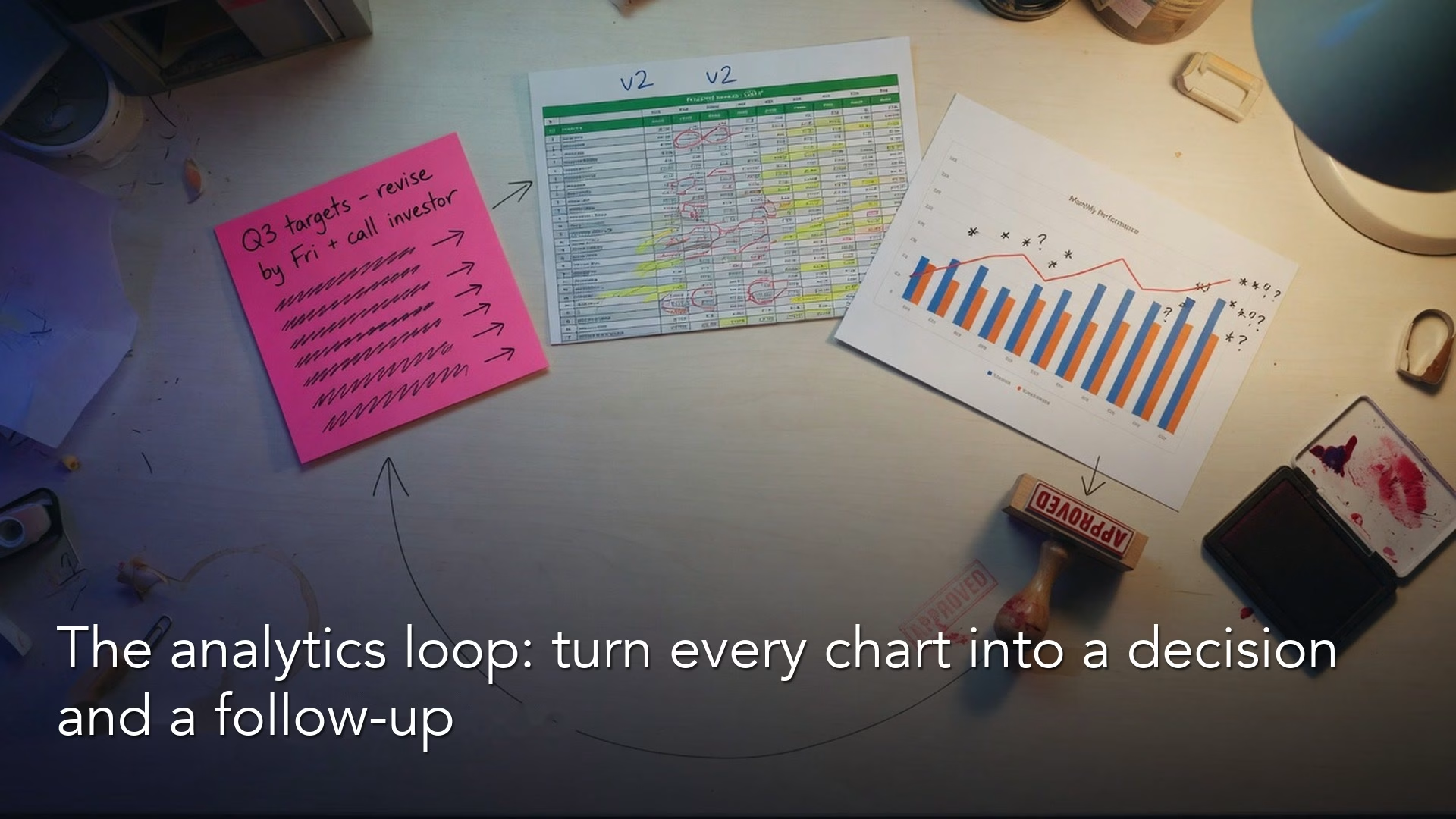
How to make sure every data analysis leads to a business decision
Analytics is not a one-way chart. Learn the six-step loop from question to measure-again, with a worked example, SQL sketch, and a ticket checklist you can reuse.
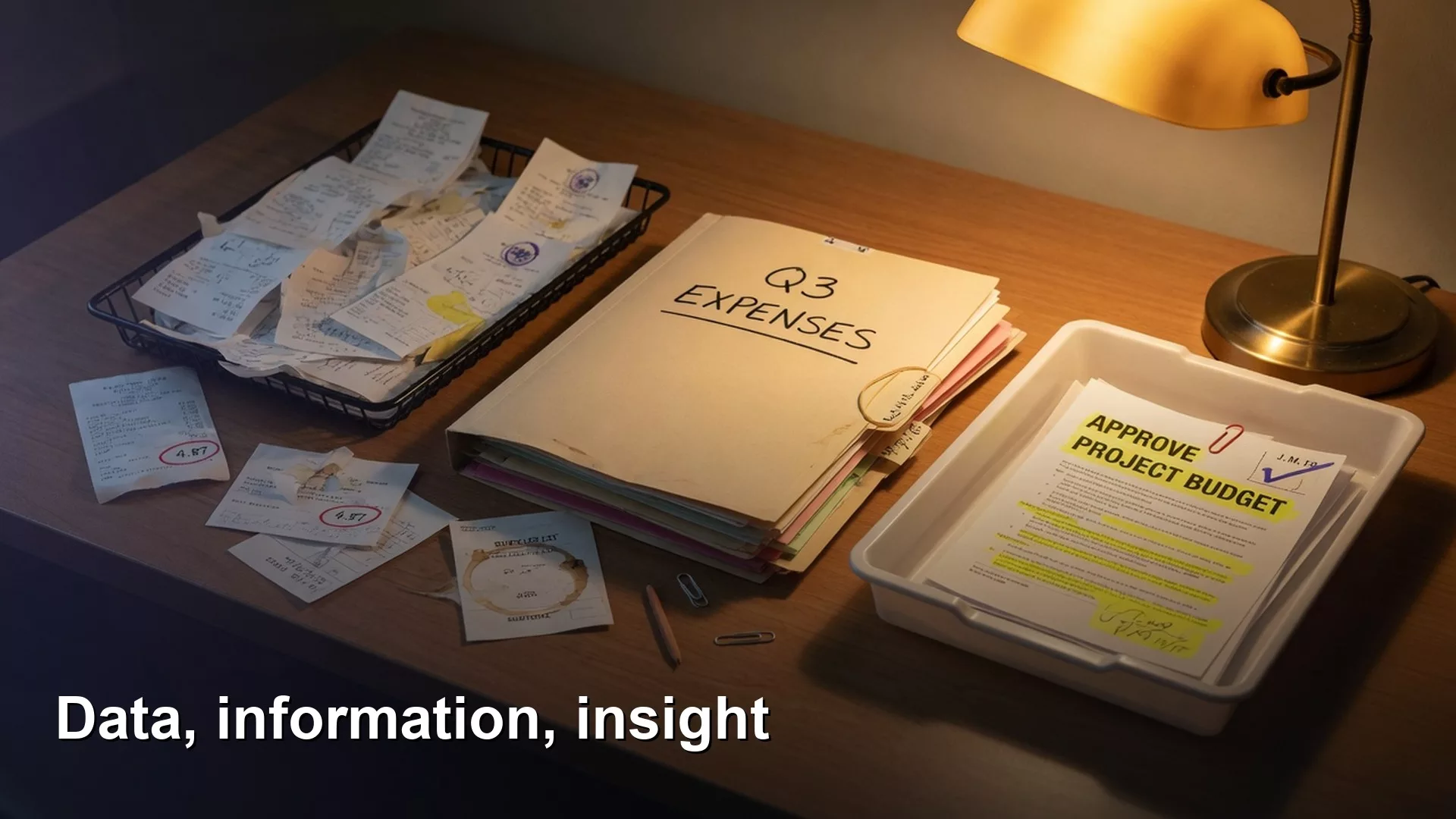
What is the difference between data, information, and insight?
Data, information, and insight are not the same thing. Learn the difference with plain definitions, a workplace ladder, and examples you can use in your next meeting.
How to start a data analysis: agree on the business decision first
Stop opening dashboards until you know which decision will change. A practical guide to framing analytics problems for everyday work; questions before data.