Category: Tutorials
You are in the right place if you want a lesson you can follow, not a glossary and not a product homepage. This shelf holds most of the articles on Analytics Made Simple. Two paths sit inside it on purpose. SQL is the database path: you have rows, and you need to ask a question without exporting another spreadsheet. AI is the tool path: chat products, open-weight models, and the jobs those tools are actually good at. Other tutorials land here when they teach a skill that does not belong on a narrower shelf.
A category page is the pile. A series page is the path, with a place to start and an order. If you open a tag or page 2 of this list, you are in a filing cabinet. The lesson is the article, or the series hub that lines the articles up.
Where to start: if the pain is a table, open the SQL series and use the first part on that page. If the pain is a model name or a chat tool, open the AI category and pick the product you already have on screen. If you are not sure which job you have, open Learn and choose the track that matches the work, not the logo.
Voice cloning scams: how to protect yourself and get consent right
Treat cloned voices as biometric risk. Build consent frameworks, verify unusual payment requests out-of-band, and prefer watermarked or attested audio in production.
Useful things to do with an AI model that runs offline on your computer
Use local models for offline notes cleanup, private contract extraction, and sensitive rewrites. Keep temperature low for facts, chunk long docs, and leave confidential text off cloud tabs.
What is Claude Duet, and how do you use Anthropic’s new agent app?
Claude Duet is Anthropic’s new agent app: it reads your connected email, calendar and work apps, sends a morning brief, checks in through the day and builds files…
What is Qwen-Coder? Alibaba’s AI models for writing code
Pick Qwen-Coder for real refactors, keep agents in a sandbox, and run dialect tests before merge. General chat fluency is not a substitute for execution.
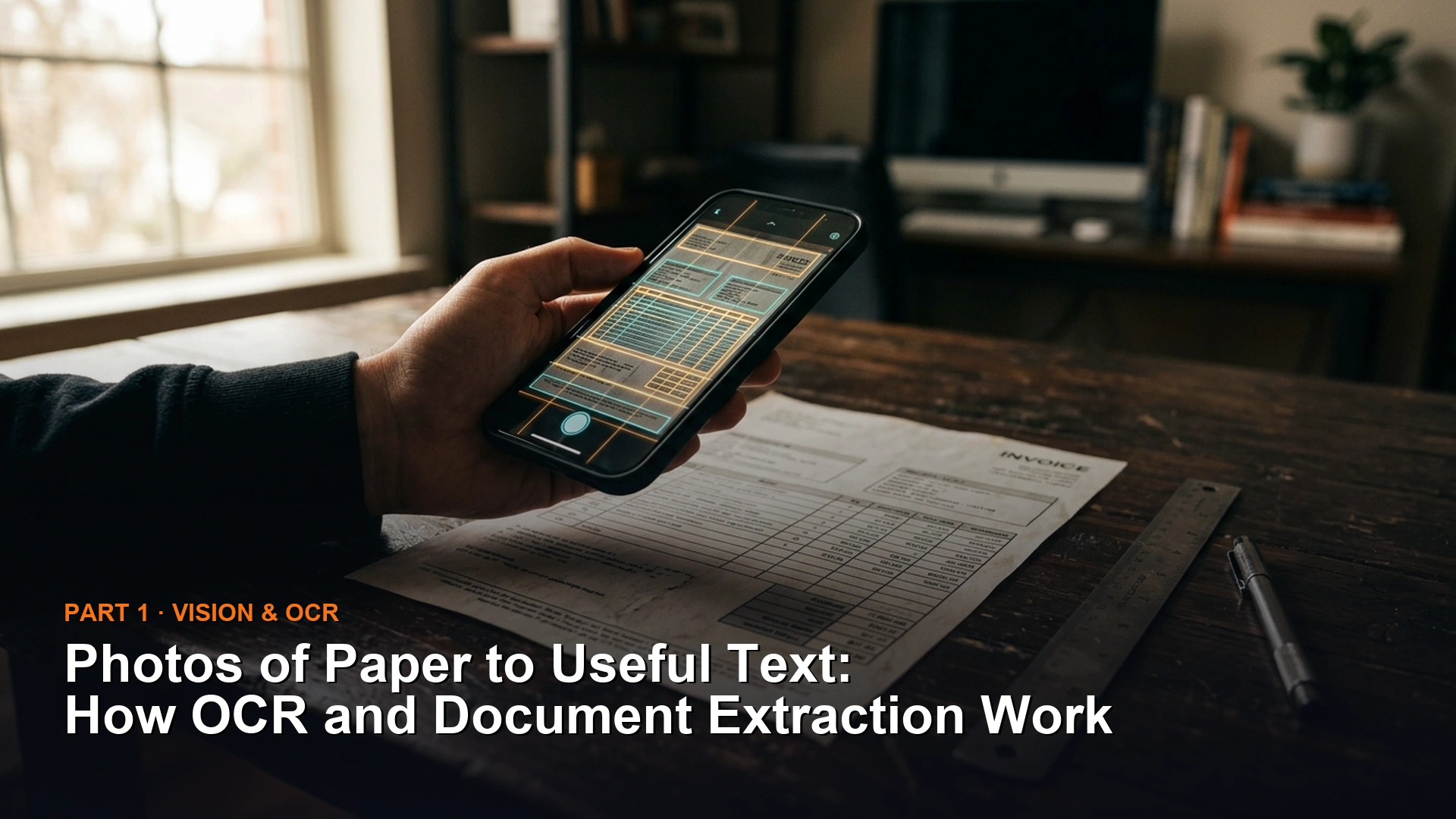
How OCR and AI turn photos of paper documents into useful text
Build document capture as a pipeline: correct the image, detect text, then extract structure. Classic OCR still matters before any LLM reasons.