Category: AI
You are here if AI showed up in your job and the names on the screen do not match the buttons. This category is practical. It is not a model-release calendar, and it is not one lesson pasted under a new product name. The series split the pile so a Claude post and a ChatGPT post can teach different work.
Everyday paths are for a person with no account yet, or a person whose chat forgot a file: setup, prompting, memory, agents, safety, and which product fits a job. Product paths stay on one tool: Claude, ChatGPT, Gemini, or Grok, from a first login to the surface you should not open. Open-weight paths are Llama, DeepSeek, Qwen, Kimi, and GLM: what the name refers to, and when a normal paid chat is the easier tool. Engineering paths are for running a model, retrieving from your own files, and fine-tuning. Several of those hubs are still waiting on a first live part, and the hub page says so.
Where to start: no account yet, use AI setup from zero. You already pay for one product, open that product’s series and use the first part. You want the idea before the brand, use Practical AI. You want every series in order, use Learn and the AI tracks.
How to check Grok’s live web answers before you share them
Verify live Grok answers before you send. Ask for sources, open the links, and check dates, versions, and numbers. A fluent rumor still needs a second tab.

How Google Gemini handles your privacy at work, and who controls the settings
Learn personal Gemini controls and Workspace admin basics. Match data classes to the seat. When this post conflicts with IT policy, IT wins.
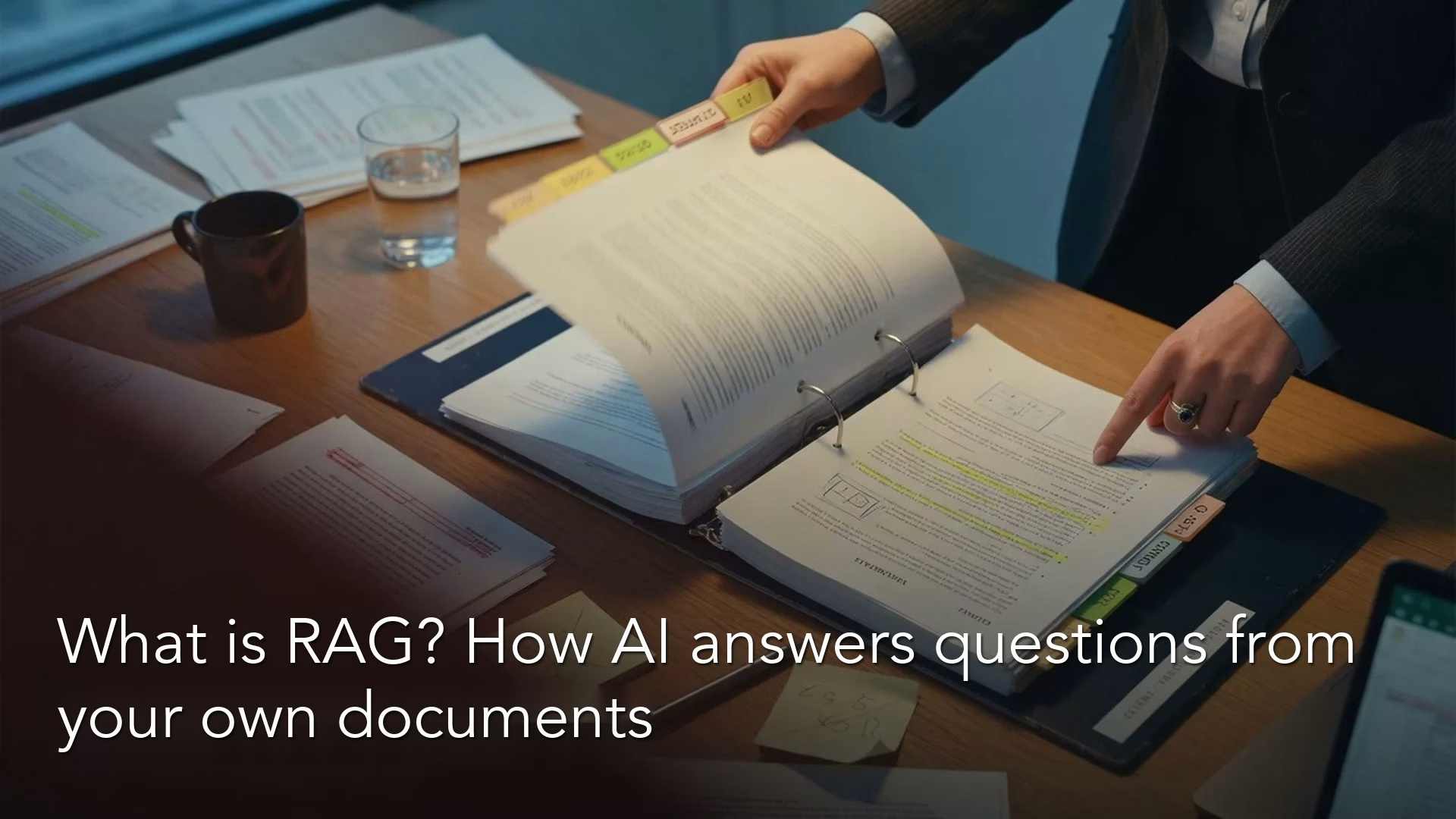
What is RAG? How AI answers questions from your own documents
RAG retrieves company passages, stuffs them into the prompt, then generates an answer. Use it for definitions and runbooks with citations. Do not treat grounding as a warranty…
How to keep your data private with AI: privacy settings or running a model yourself
Closed chat, hosted open weights, and local models are different privacy lanes. Strip identifiers before any paste. Local is optional; it is not free of responsibility.
How to use Grok for writing, explaining, and brainstorming
Use Grok to draft, explain, or brainstorm, one job at a time. Put audience, facts, and forbidden words in the brief, then run a two-minute name and number…