AI tools that write code have built rough, free copies of Photoshop and other paid apps in a few weeks, but the people behind them say the copies are not ready to replace the originals for real work yet. Copying how an app looks and works is also a different thing, legally, from copying its code. If you pay for one of those apps, the useful question is simpler: does a free copy open your files, and can you trust the download?
Imagine you pay for a photo-editing subscription mainly to crop pictures and fix the color on product shots a few times a month. A post in your feed says AI just rebuilt that app for free, and a friend asks whether you should cancel. This post looks at what was actually released, how close it is by its makers’ own measurements, where the legal lines sit, and how to try one without regretting it.
What ArtCraft actually released
ArtCraft is a project led by Brandon Thomas, according to a Linux news site that covered the launch. Its apps live on GitHub, the site where programmers share code, under an account called storytold. The best known is PhotoCraft, which its project page calls “an open-source, clean-room reimplementation of Adobe Photoshop, rebuilt in pure Rust.” Open source means anyone can read, change, and share the code. Rust is a programming language known for speed and safety. A reimplementation is a new program written to do what an existing one does.
PhotoCraft’s repository, its folder of code and history on GitHub, was created on September 30, 2026, and had about 58,000 stars on GitHub by October 13, 2026, when this post was written. A star is GitHub’s bookmark-and-like button, so it measures attention, not quality. The same account now lists copies aimed at more than Adobe’s apps. By our count of the storytold account’s repositories on October 13, 2026, the others had roughly 12,000 to 13,000 each for PdfCraft, FilmCraft, and LightCraft, about 11,000 for WordCraft, about 8,500 for VectorCraft, about 6,000 for EffectCraft, about 4,000 to 4,500 each for GridCraft and CADCraft, about 3,700 for DesignCraft, about 3,000 for DeckCraft, and about 2,600 for SoundCraft. WordCraft, GridCraft, DeckCraft, CADCraft, and SoundCraft say on their own pages that they copy Microsoft Word, Excel, PowerPoint, AutoCAD, and Avid Pro Tools.
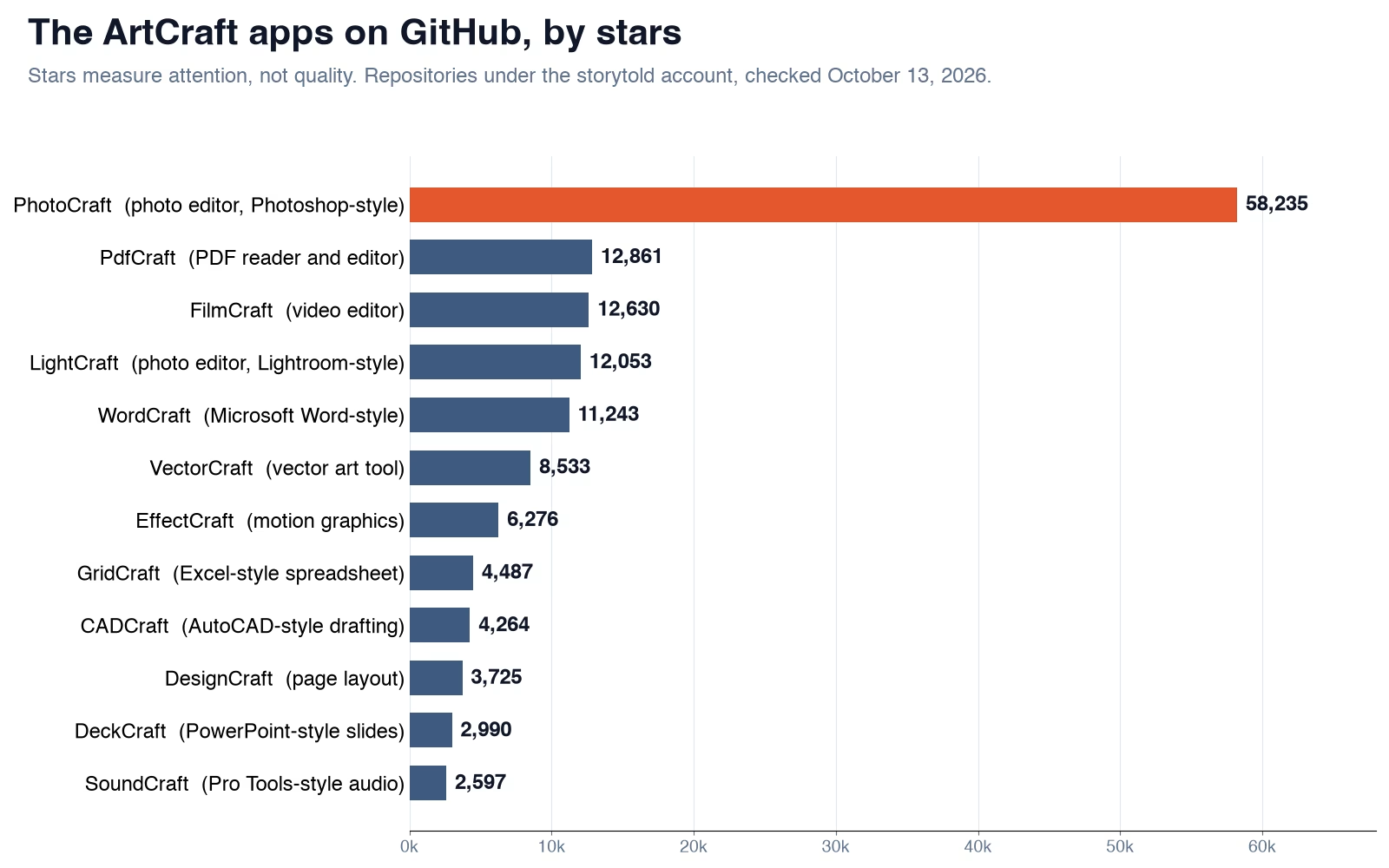
The project page says the apps are free under two standard open-source licenses, known as the MIT License and Apache 2.0, which let you use them even at work. It labels PhotoCraft’s status as “early alpha.” Alpha is the stage before beta, when software is expected to break.
How close PhotoCraft is to Photoshop, by its own numbers
The most useful document in the project is its roadmap, last reviewed on October 11, 2026. It compares PhotoCraft 0.6.0 with Photoshop 2026 and puts numbers on the gap. Most of them are the team’s own estimates, so treat them as the makers’ claims.
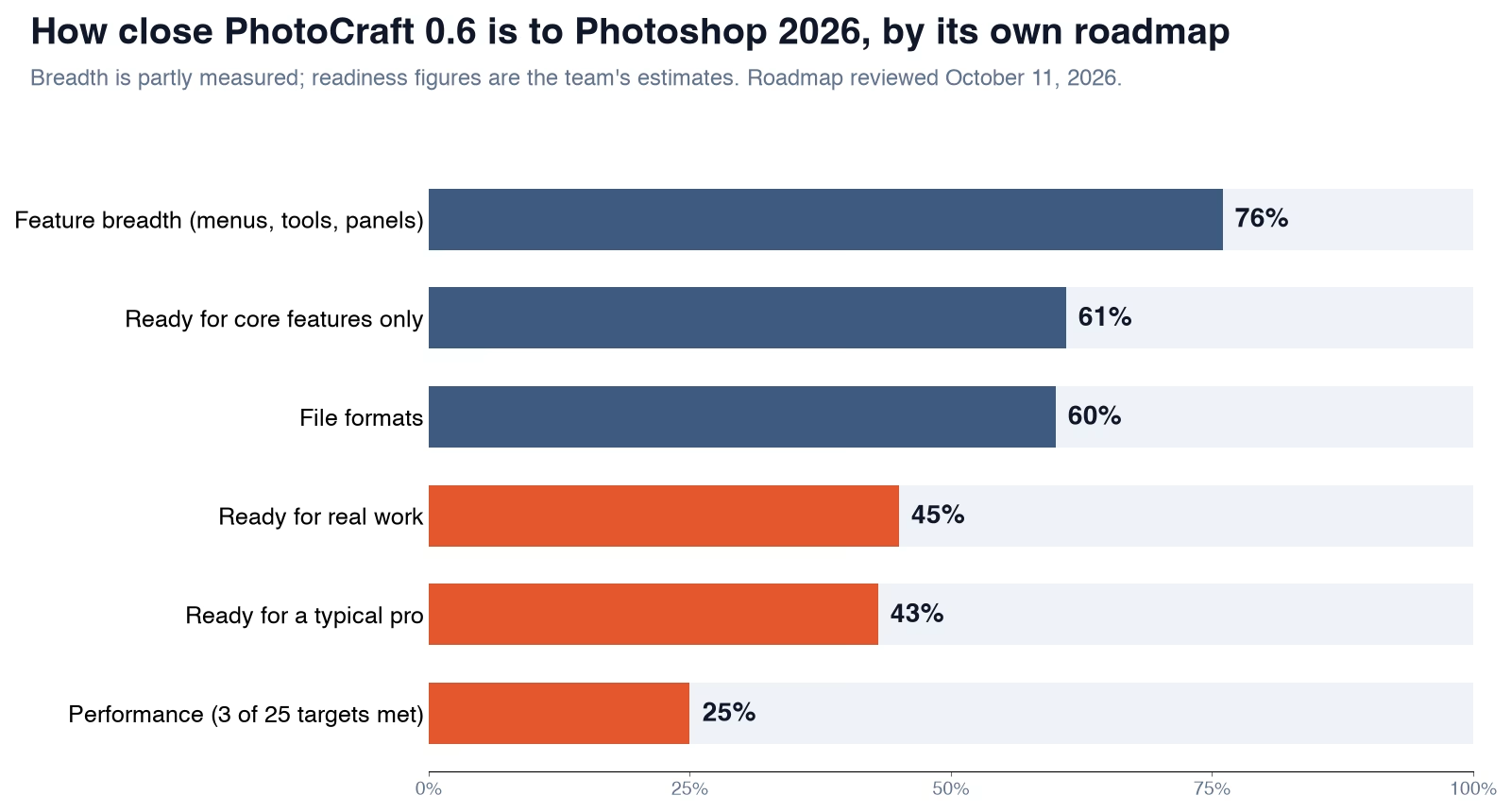
The roadmap’s headline number is about 76% feature breadth, which means most of Photoshop’s menus and tools exist in some form. The number that matters for a working day is lower: about 45% “ready for real work.” For people who only use the core features, the roadmap’s estimate is about 61%. The roadmap also lists 579 open issues from users of the recent versions, says 22 of its 25 speed targets are missed, and warns that Photoshop files written by PhotoCraft “are not yet reliably accepted by Photoshop.”
That last point is the one to remember if you share files. The project page says re-saving keeps the look of 307 of 309 test files from a public Photoshop file library, which is impressive for reading. Writing a file that a coworker’s real Photoshop opens cleanly is a separate problem the team says it has not solved.
The roadmap estimates that beta, at about 75% ready, is roughly 1,100 to 1,800 hours of work by AI agents away. An agent is an AI that takes steps on its own, like editing files and running tests, instead of only answering in chat. That is a lot of work left, but it is also a pace no small team could have matched by hand.
How AI agents did the building
The roadmap does not hide how the work is done. Its time estimates are in “Opus 5.5 agent wall-clock hours,” calibrated from 1,004 merged pull requests in the repository. Claude Opus 5.5 is one of Anthropic’s largest models, compared with the others in the guide to Claude models. A pull request is one proposed change to the code that gets reviewed and merged.
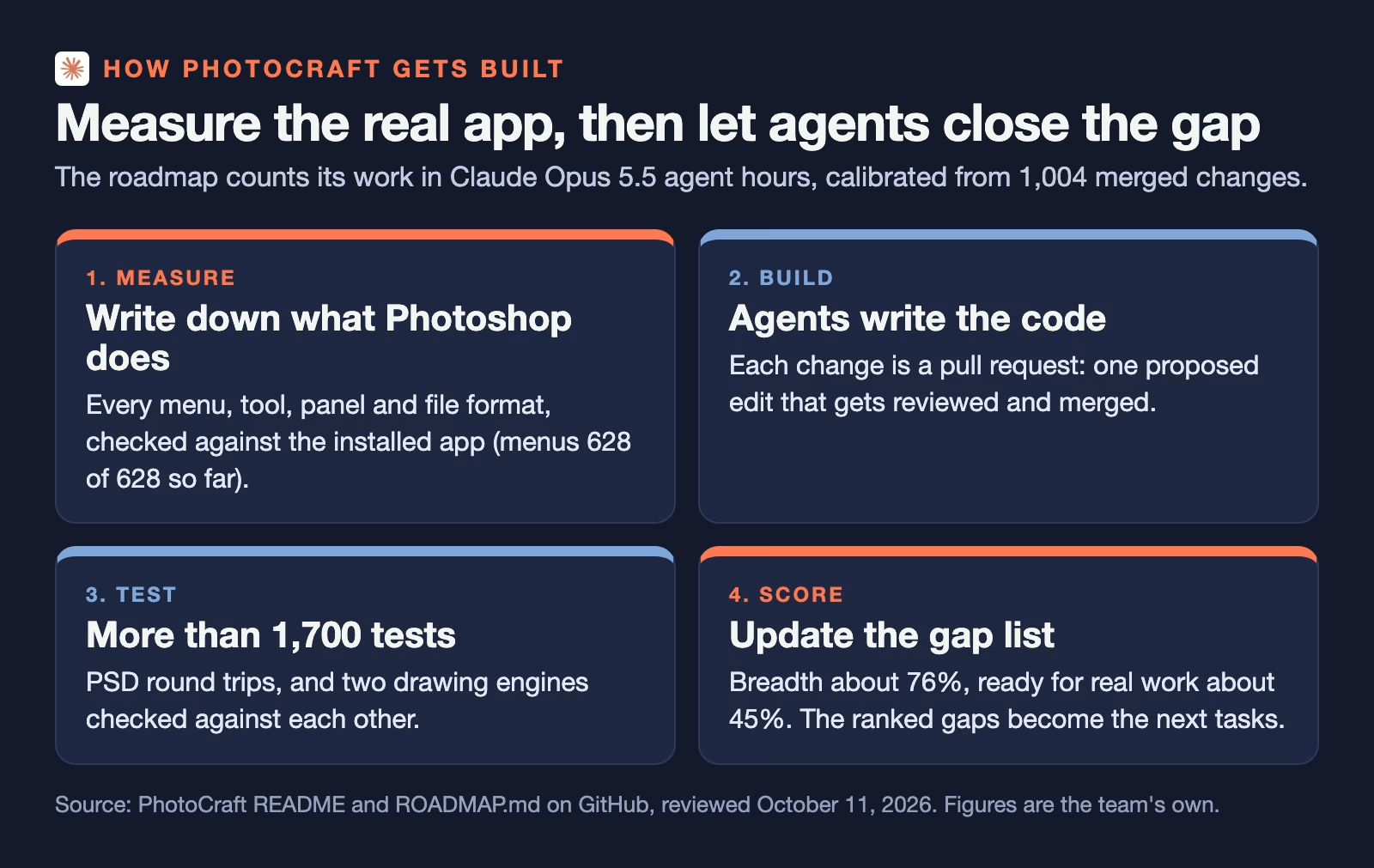
The pattern is the interesting part. According to the roadmap, the team measures the real app, writes down what each menu, tool, and file format should do, and lets agents build and test against that list. The project page reports more than 1,700 tests, and says the app can be driven by commands, including through the Model Context Protocol, the standard that lets an AI assistant use tools. So the same agents that build PhotoCraft can also operate it.
You do not need to care about Rust to take something from this. The bottleneck has moved from writing code to writing an exact description of what the code should do, and checking that it does.
Copying how an app behaves is not copying its code
“Clean-room” is the key legal word on the project page. A clean-room design is a way of rebuilding software so the new code cannot be a copy: one side studies the original and writes a description of what it does, and a separate side writes new code from that description only. The project page’s claim is that PhotoCraft was “implemented from public specs and observed behaviour only. No proprietary code, shaders or assets.”
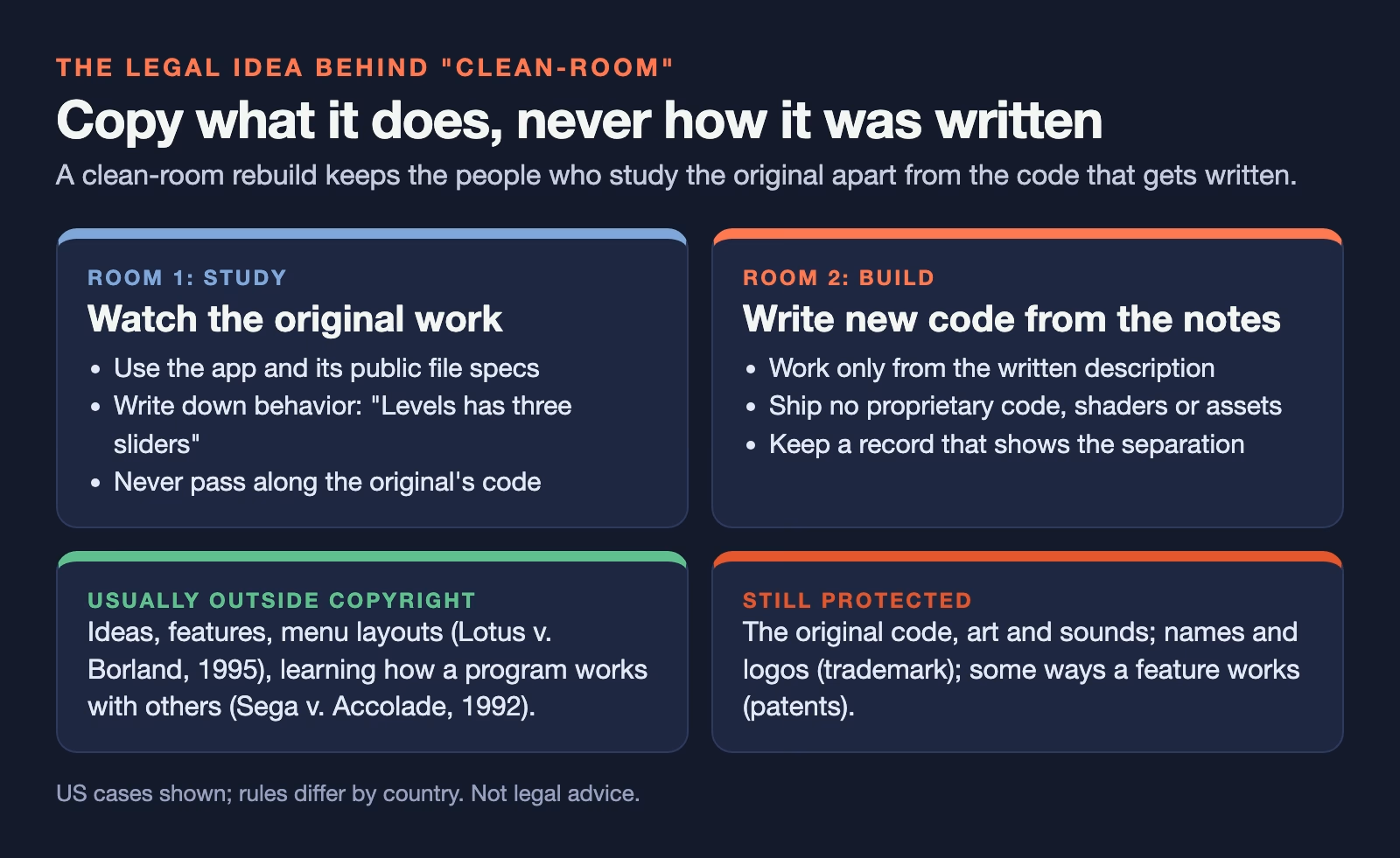
Copyright protects code as written, not the idea of a crop tool. US courts have drawn some lines that matter here. In Sega v. Accolade (1992), a federal appeals court held that taking apart a program to learn how to work with it could be fair use. In Lotus v. Borland (1995), another appeals court held that a menu layout was a method of operation that copyright did not cover. In Google v. Oracle (2021), the Supreme Court held that Google’s copying of Java’s interface code was fair use.
Those cases do not settle everything. Names and logos are trademarks, which is a separate set of rules, and patents can cover how a feature works no matter who wrote the code. ArtCraft’s own brand license shows the split: the code is open source, but the ArtCraft name and logo are not, and the project forbids using them on anything else. Rules also differ by country, and this post is not legal advice. Adobe had not commented publicly on the project in the coverage found for this post (searched October 13, 2026).
Why the game ports are a different story
The same weeks brought a wave of AI-made game ports, and they are easy to lump in with PhotoCraft. They are not the same thing. Kotaku reported on October 9, 2026 that browser versions of Call of Duty: Black Ops, Halo: Combat Evolved, Grand Theft Auto: Vice City, Skate 3, and The Simpsons: Hit and Run had appeared, and credited Claude Opus 5.5 as “extremely good at decompiling.”
Decompiling means turning a finished program back into readable code. A clean-room rebuild starts from a description of behavior, but a decompiled port starts from the original game, and a browser port usually needs the game’s art, music, and levels too. Those belong to the publisher. US law does carve out some room for reverse engineering to make programs work together, for example the interoperability exception in 17 U.S.C. 1201(f), but handing out a playable copy of someone else’s game is a different act.
Publishers have already pushed back. A report from iXBT Games on October 4, 2026 says Activision had a video of an AI-assisted Modern Warfare 2 decompilation taken down and blocked the site that hosted the code. The developer said 17 AI agents worked on it at once. The viral claim that these games are now free forever does not hold up.
Should your team switch to an AI-built copy?
For most teams, not yet, and that answer comes from the project’s own numbers rather than from loyalty to the paid app. The team’s own 45% readiness estimate is fine for trying things and risky for client work. The better approach is a small test with your own files.
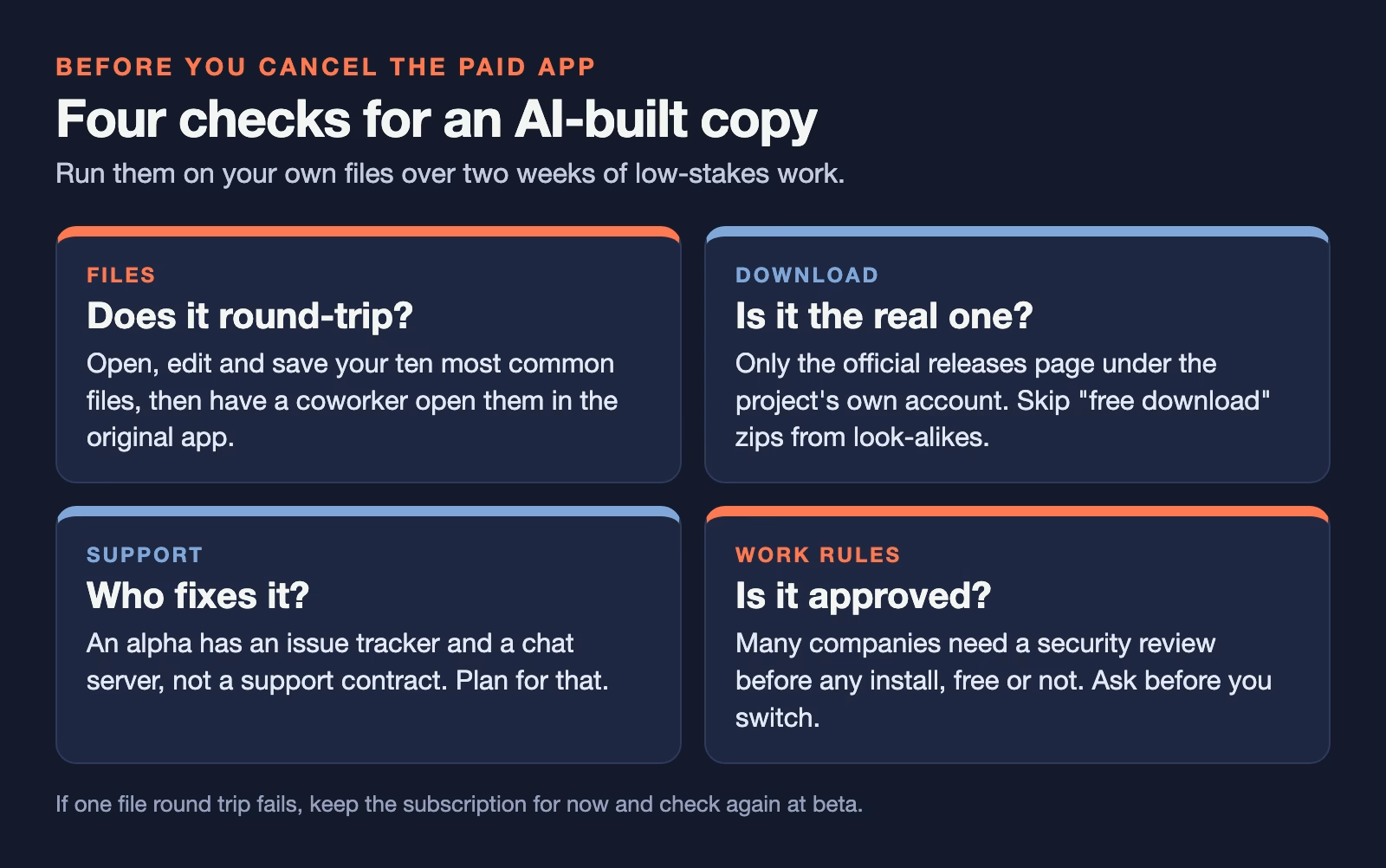
Give it two weeks on real but low-stakes work, like resizing product photos or cropping images for a newsletter. Keep the paid app until you have opened, edited, and saved your ten most common file types, and until someone else has opened those saved files in the tool they use. If a file round trip fails once, you have your answer for now.
Two more questions belong on the list. Who fixes it when it breaks? With a paid app you have a support contract. With an alpha project you have a public issue tracker and a Discord server. And who approves new software at work? Many companies require a security review before anyone installs an app, free or not.
Watch out for fake downloads
Popular free software attracts copycats. A GitHub search on October 13, 2026 turned up several look-alike repositories, not owned by the storytold account, that offer an “official free download” of PhotoCraft or ArtCraft as a zipped Windows file. Download zips like those are a common way to spread malware, which is software that steals data or damages your computer.
Download only from the PhotoCraft releases page under the storytold account, or from the project’s own site linked on that page. Check the account name in the address bar before you click anything. If a page asks you to turn off your antivirus to install, close it.
What to do with this news
If you pay for creative software only for light editing, try PhotoCraft from the official release page on a personal computer with a copy of your files. If you share files with a client or a coworker who uses Photoshop, keep your subscription for now and check the roadmap again at the beta mark. If your job is building software, read the roadmap anyway: the way it turns a target app into a measured checklist for AI agents is the part that will spread.
Rights questions about AI and other people’s work come up often on this site. For images and brands, see why not to use Grok Imagine for real people or logos, and for model licenses, see whether you can use Meta’s Llama at work.
Sources
- PhotoCraft on GitHub (README) (clean-room claim, licenses, early alpha status, PSD test results, 1,700+ tests, MCP control, release downloads)
- PhotoCraft roadmap, reviewed October 11, 2026 (readiness estimates, 579 open issues, 22 of 25 performance targets missed, PSD writing caveat, Opus 5.5 agent hours, 1,004 merged pull requests)
- ArtCraft brand license (name and logo are trademarks, not open source)
- OMG! Ubuntu: PhotoCraft is an open-source, AI-built clone of Photoshop (project lead, built with AI coding tools, alpha status)
- Kotaku: vibe-coded browser ports of Halo, The Simpsons: Hit and Run and GTA Vice City (October 9, 2026) (games ported, Claude Opus 5.5 and decompiling)
- iXBT Games: Activision removed AI decompilation of Call of Duty: Modern Warfare 2 (October 4, 2026) (takedown, 17 agents)
- Wikipedia: Clean-room design (what a clean-room rebuild is)
- Wikipedia: Sega v. Accolade (1992) (reverse engineering for compatibility as fair use)
- Wikipedia: Lotus v. Borland (1995) (menu hierarchy as a method of operation)
- US Supreme Court: Google LLC v. Oracle America, Inc. (2021) (fair use of interface code)
- 17 U.S.C. 1201 (Cornell Legal Information Institute) (reverse engineering exception for interoperability, subsection (f))
Keep going
Same lessons in your feed
Short diagrams, hooks, and weekly tutorials on Substack, Instagram, X, and Facebook.