Microsoft Decision-1 is an AI model that picks an answer from a short list you give it and tells you how sure it is. It does not write sentences. Microsoft released it on October 9, 2026 in its cloud catalog for AI models, at the same listed price as TypeSafe’s Jev (checked October 11, 2026). This post explains what it does, how it compares with Jev, and how to choose between them.
Imagine your company already runs its apps on Microsoft’s cloud. A teammate built a small helper on Jev that sorts incoming requests, and it works. Now your IT lead asks a fair question: why pay a second vendor when Microsoft sells the same kind of model in the account you already have?
What does Decision-1 do?
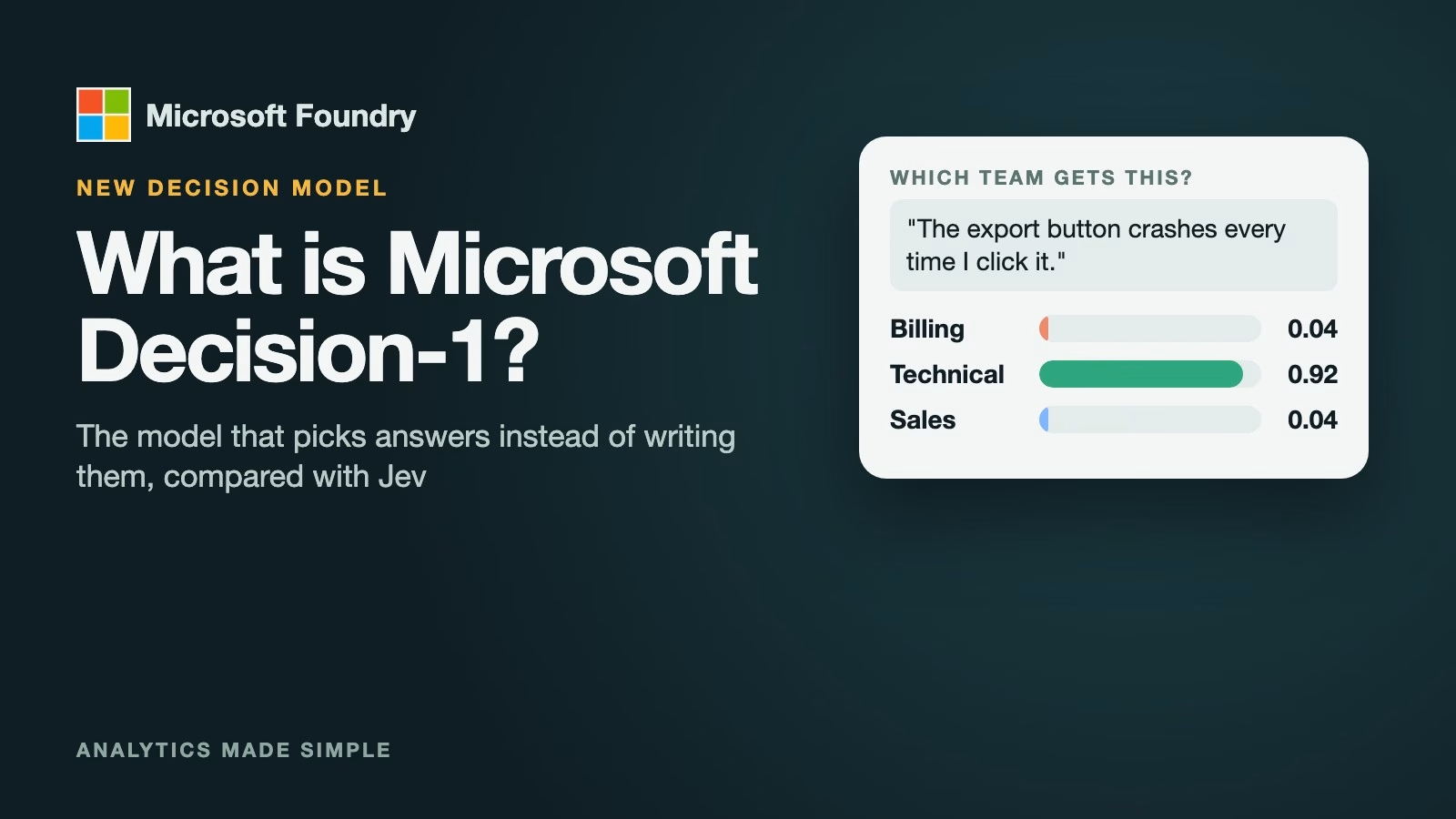
Microsoft Decision-1 is a decision model, a kind of AI model that answers fixed questions with numbers instead of writing text. You give it some text and a question with a set list of answers, such as “billing, technical, or sales”. It returns a probability for each answer, a number from 0 to 1 that says how likely that answer is.
Your program reads those numbers and acts on them. A 0.94 on “technical” means the request goes to the technical team. A 0.51 might mean a person should look first. Because the model never writes free text, there is nothing to parse and nothing for it to make up.
Microsoft announced Decision-1 in a post by Achint Srivastava, one of its vice presidents (checked October 11, 2026). It lives in Microsoft Foundry, Microsoft’s catalog where companies on Azure, its cloud service, pick and run AI models. The announcement says it also comes to OpenRouter, a service that sells access to many models through one account.
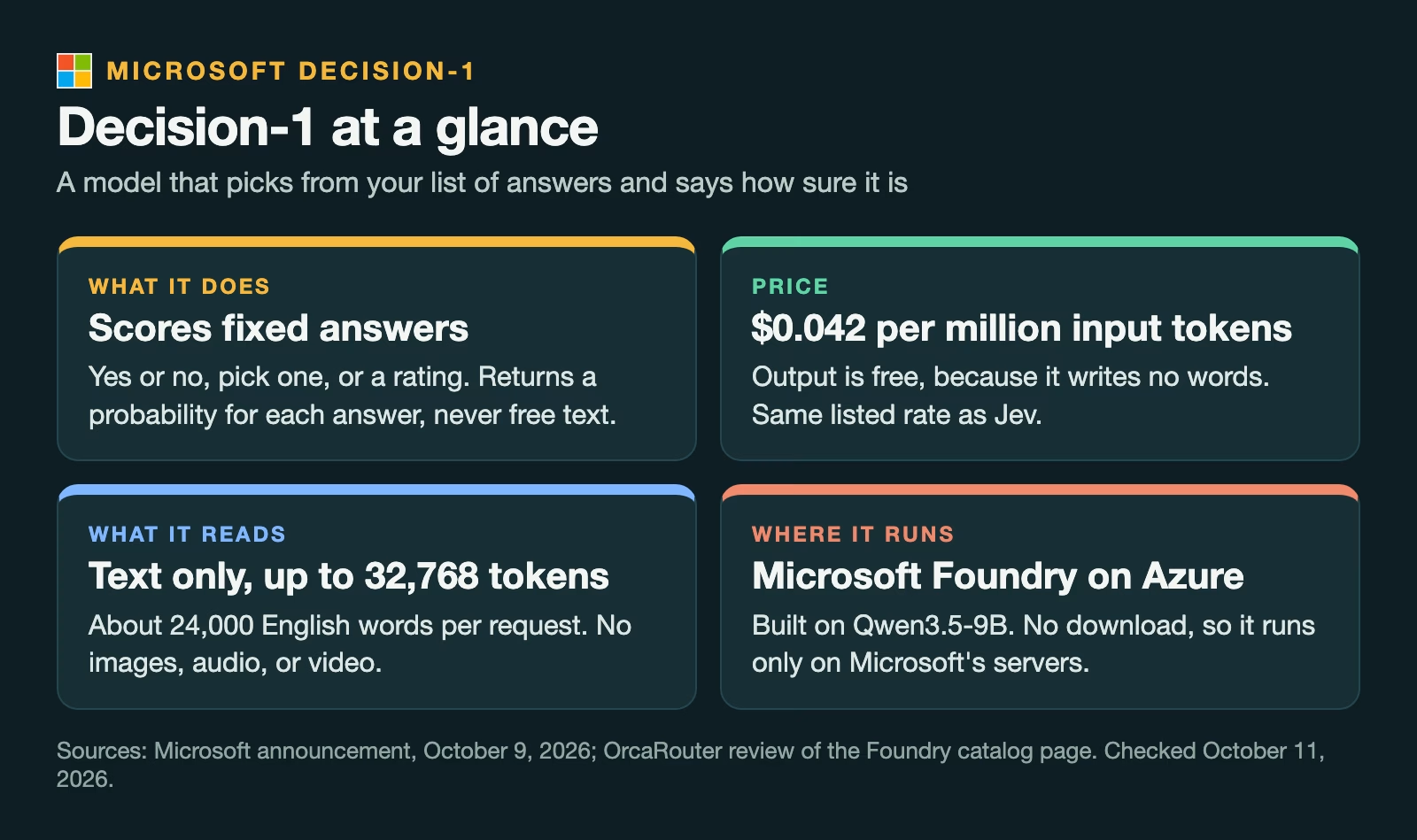
Four facts from the announcement and the catalog matter most for a buyer. These were all checked on October 11, 2026, and vendors change them often.
- It costs $0.042 per million input tokens with free output, per the announcement (checked October 11, 2026). A token is a small chunk of text, and 1,000 tokens is about 750 English words.
- Microsoft built it on Qwen3.5-9B, an open model from Alibaba, and then trained it further to score answers in one quick pass.
- It reads text only. The catalog page lists no image, audio, or video input, and one request holds up to 32,768 tokens, according to a review of the catalog page by OrcaRouter (checked October 11, 2026).
- You cannot download it. The same review notes that Microsoft does not share the model files, so it runs only on Microsoft’s servers.
What Decision-1 cannot do
Decision-1 cannot write anything. It will not draft a reply, explain its choice, or summarize a document, so a workflow that needs words still needs a regular chat model next to it. It also knows only what you put in the request. Ask whether a customer is on the premium plan and it can only guess, unless the plan name is in the text you send.
Language is the other limit. OrcaRouter’s review says the catalog lists 25 languages and warns that quality may vary between them. If your requests arrive in several languages, test each one separately rather than trusting an average.
Why Microsoft built a model that only picks answers
Microsoft built Decision-1 because AI agents make many small choices in a row, and slow choices add up. An AI agent is a program that takes steps on its own, like reading a ticket, looking something up, and replying. Between steps it keeps asking itself small questions: keep going, stop, try again, or hand this to a person?
Microsoft’s announcement gives the arithmetic. If each of those checks adds 100 milliseconds (a tenth of a second) and an agent makes 20 of them in a row, the user waits two extra seconds. A big chat model is slow at these checks because it writes its answer one word at a time. A decision model answers in one pass, so the checks stop piling up.
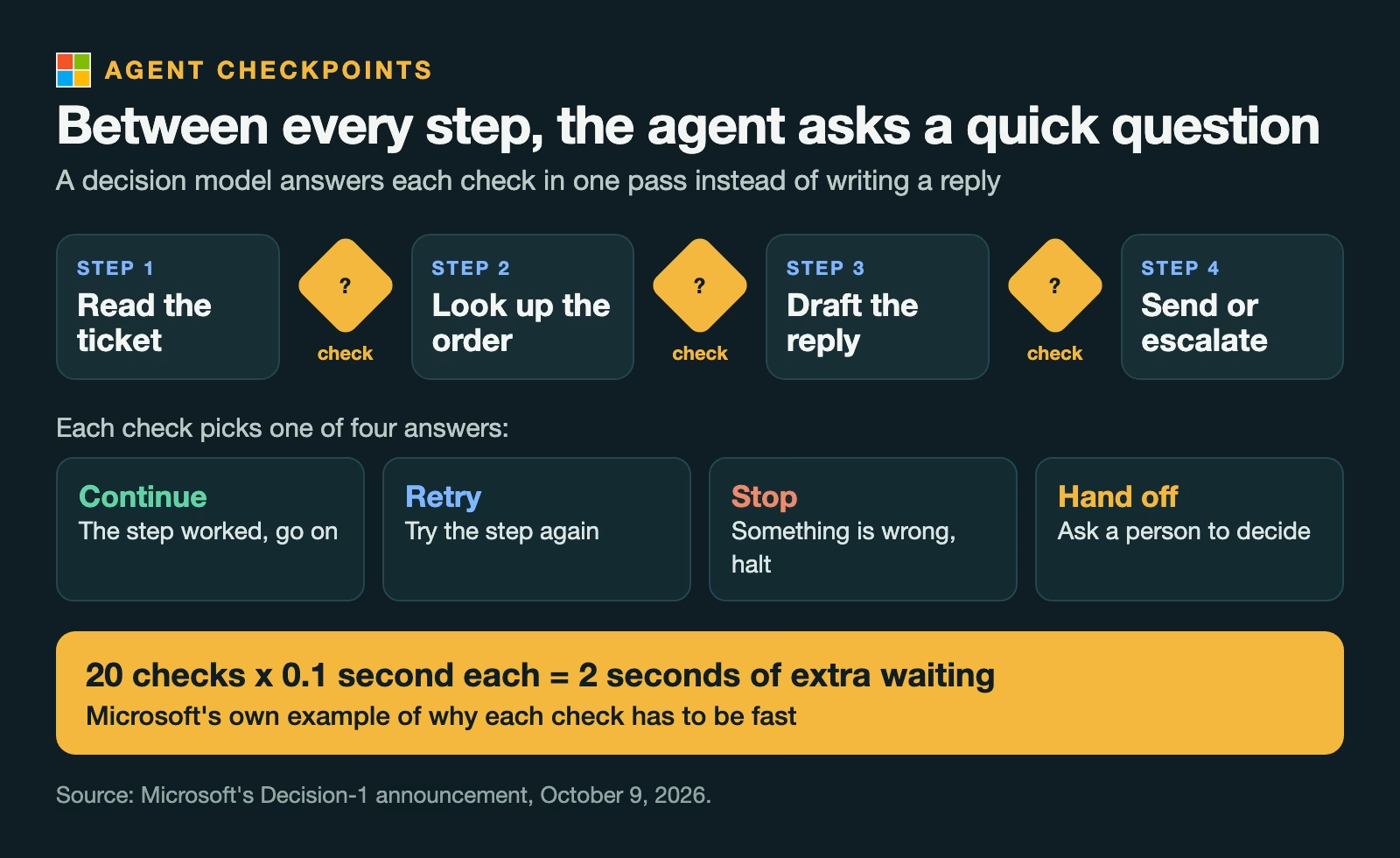
The announcement lists the jobs Microsoft has in mind: routing a request to the right model or team, labeling data, judging another AI’s answer, and screening for unsafe content. Microsoft also says some of its own product teams use it for labeling and for checking answers. Treat that as a claim from the seller, because no outside group has checked it yet.
The plain lesson for your team: if your workflow asks the same yes-or-no or pick-one question thousands of times a day, a decision model fits. If the job needs a written reply, an explanation, or new ideas, it does not.
How does Decision-1 compare with Jev?
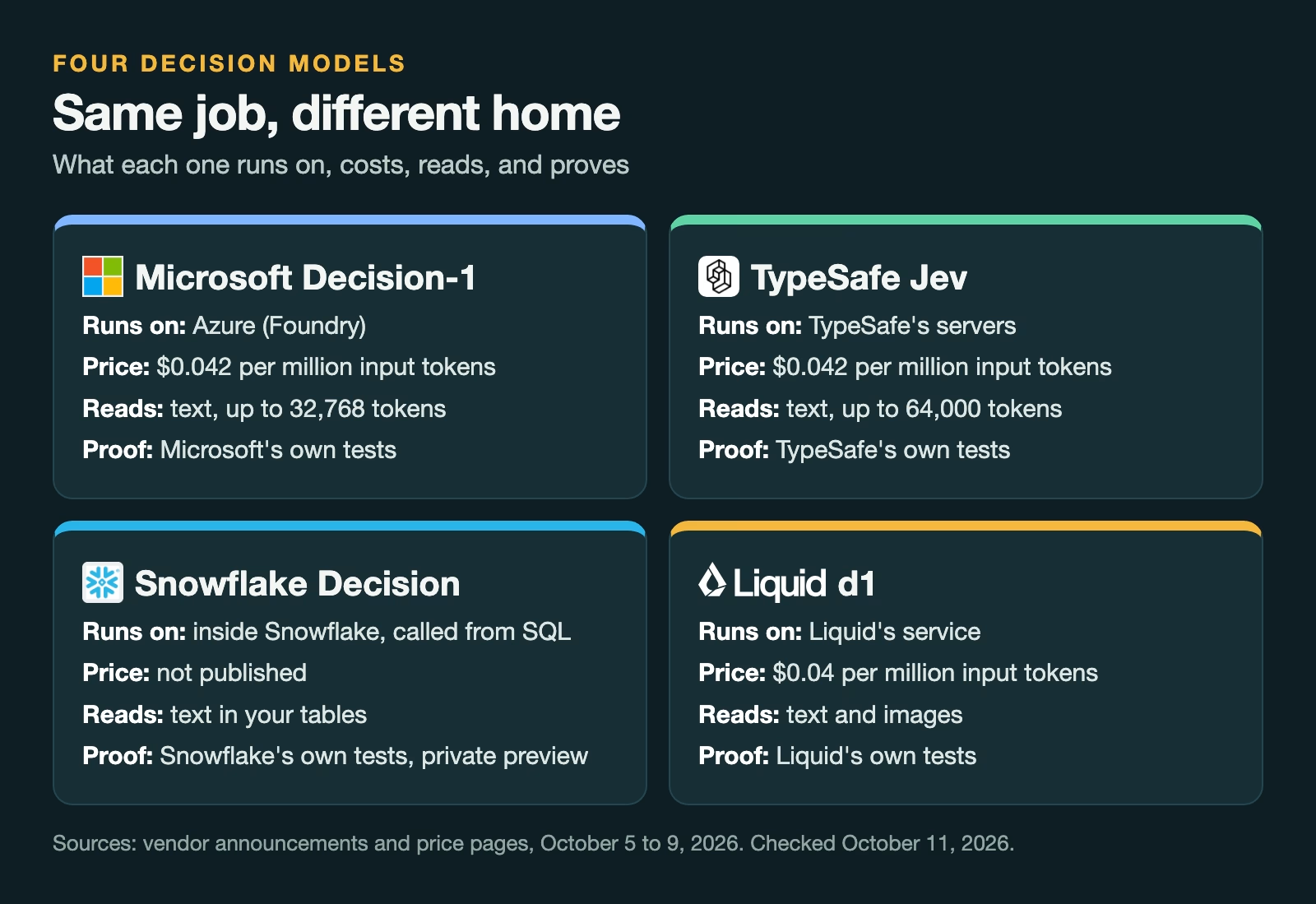
Decision-1 and Jev do the same job at the same listed price, so the real differences are where they run, how much text they read, and what proof each vendor shows. Jev comes from TypeSafe AI and opened this category in September 2026. If Jev is new to you, the post on what System One models are explains the idea from scratch.
Both charge $0.042 per million input tokens with free output. That is Jev’s rate on its models page and Decision-1’s rate in Microsoft’s announcement (both checked October 11, 2026). At equal prices, cost is not a reason to switch either way.
Where they run is the first real difference. Jev runs on TypeSafe’s servers, so your text leaves your company’s cloud account. Decision-1 runs inside Azure, so a company that already keeps its data and contracts with Microsoft adds no new vendor. For many security teams, that single point settles it.
How much they read is the second. Jev takes up to 64,000 tokens in one request, about twice Decision-1’s 32,768, according to TypeSafe’s models page (checked October 11, 2026). That matters if you score long documents, like a full contract or a long email thread. For short tickets and chat messages, both have room to spare.
Proof is the third difference. When Decision-1 launched, OrcaRouter pointed out that the catalog’s benchmarks tab, the place for standard test results, described a method but showed no scores. Microsoft’s announcement says it tops a comparison of 36 benchmarks with nearly 150,000 questions. A later update added results on JevBench, a public test set for decision models. Microsoft ran all of these tests itself.
Microsoft makes one claim worth testing yourself: steady answers. Its announcement says shuffling or reversing the answer options, or rewording their descriptions, never changed the decision in its tests. Early users of OpenAI’s decision service reported the opposite, where reordering the options changed the answer, as the Jev alternatives post describes. You can check this in ten minutes, and the test section below shows how.
More decision models that arrived the same month
More decision models arrived or got cheaper in the same two weeks, and each one makes sense for a different kind of company. The earlier post comparing Jev alternatives covered OpenAI, Cloudflare, and the free models. The ones below came later or changed since.
Snowflake Decision
Snowflake Decision runs inside Snowflake, the data warehouse where many companies keep their business tables. A data warehouse is a big database built for analysis, and Snowflake users ask it questions in SQL, the standard language for asking a database for data. Snowflake’s announcement on October 8, 2026 shows the model called from an ordinary SQL query through a function named AI_COMPLETE.
That means an analyst can tag a whole table of support tickets, say by team and by urgency, with one query and never move the data out. Snowflake says the access rules and audit records the company already has apply to every decision. An audit record is the log of who looked at what, and keeping it in one place is a big deal for regulated teams.
Two cautions apply. It is in private preview, so you ask your Snowflake account team for access, and Snowflake’s post gives no price (checked October 11, 2026). Snowflake also says it scored highest of 72 models on the Jev Decision Index, but it ran only 29 of the index’s benchmarks, and it ran them itself.
Liquid d1
Liquid AI’s d1 can look at pictures as well as text, which neither Jev nor Decision-1 can do. Liquid’s launch post on October 5, 2026 shows it judging product photos for defects and playing simple games from screenshots. It says a text decision takes 200 to 300 milliseconds.
Liquid’s post uses $0.04 per million input tokens for its cost math (checked October 11, 2026), and it counts images as tokens too. A 1,024 by 1,024 pixel image counts as 1,536 tokens. You call it through Liquid’s own service. The post says Vercel and OpenRouter also carry it, with text only for now. Liquid ran its comparisons against GPT-6.1 Sol and Claude Opus 5.5 itself.
Newer options from Cloudflare, Perplexity, and Subquadratic
On October 9, 2026, Cloudflare cut the price of Clef-flash, its fast decision model, from $0.09 to $0.038 per million input tokens, according to the Workers AI pricing page (checked October 13, 2026). The same announcement added Clef-omni, which reads audio and video as well as text and pictures, at $0.15 per million input tokens. That means it can judge a call recording or a short video clip directly, without first turning it into text.
Perplexity, the AI search company, sells a decision model too, called pplx-decider. Its Decisions quickstart lists $0.02 per million input tokens, free output, up to 262,144 tokens per request, and images as well as text (checked October 13, 2026). Perplexity also said on X that the model scored 94.5% on 1,071 cases in a test called Decision Bench, the best accuracy of any model it lists. Perplexity reported that score itself, so treat it as a claim to check on your own cases.
Subquadratic, a newer AI company, launched a decision model called SubQ Snap on October 12, 2026. Its launch page lists $0.05 per million input tokens, free output, and room for up to 384,000 tokens in one request (checked October 13, 2026). That is enough for a long contract or a whole case file, where the others would need the text cut into pieces first. Subquadratic says Snap beat Jev on 13 of 16 business tests, but it ran those tests itself, so check them on your own cases.
What a million decisions cost on each
For the three with a public price, the bill is input tokens times the price, because none of them charge for output. Imagine each decision reads about 1,500 tokens, roughly one support email plus the questions. A million decisions then read 1.5 billion tokens.
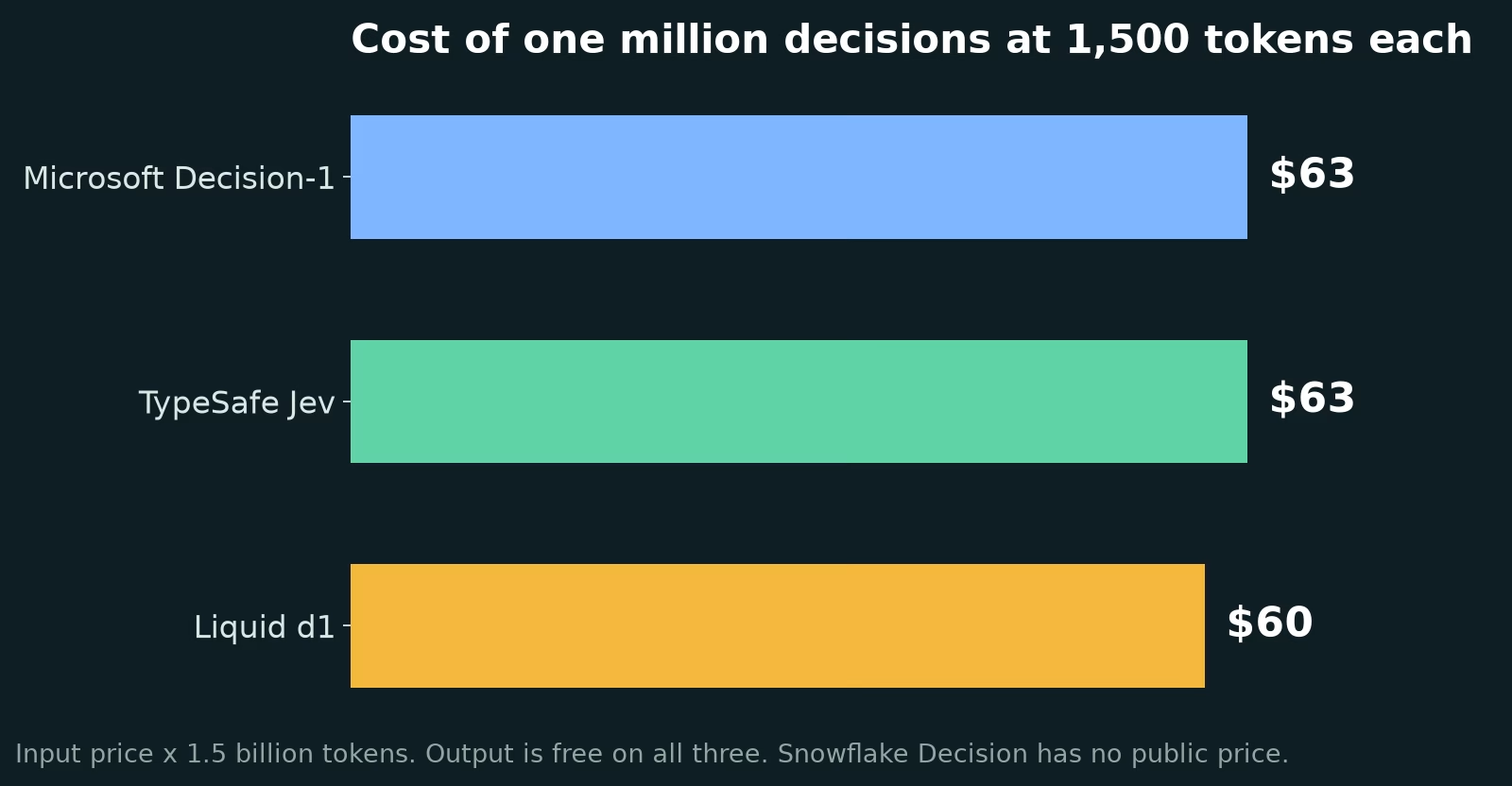
At that volume, Decision-1 and Jev each cost $63 and d1 about $60. Those numbers are small next to the time a person would spend sorting a million emails, so price should not drive the choice. Snowflake is left off the chart because it has not published a price, and its cost will depend on your Snowflake contract.
Two more options cost less than the three on the chart. At the same 1,500 tokens per decision, a million decisions would cost about $57 on Clef-flash and about $30 on pplx-decider. Even the biggest gap, about $33 next to Jev, is rarely a reason to switch by itself.
Which one should your team use?
Use the decision model that sits where your data already lives, unless you need something only another one does. That rule keeps your data in fewer places, which is what your security team cares about most. The cards below match common situations to an option.
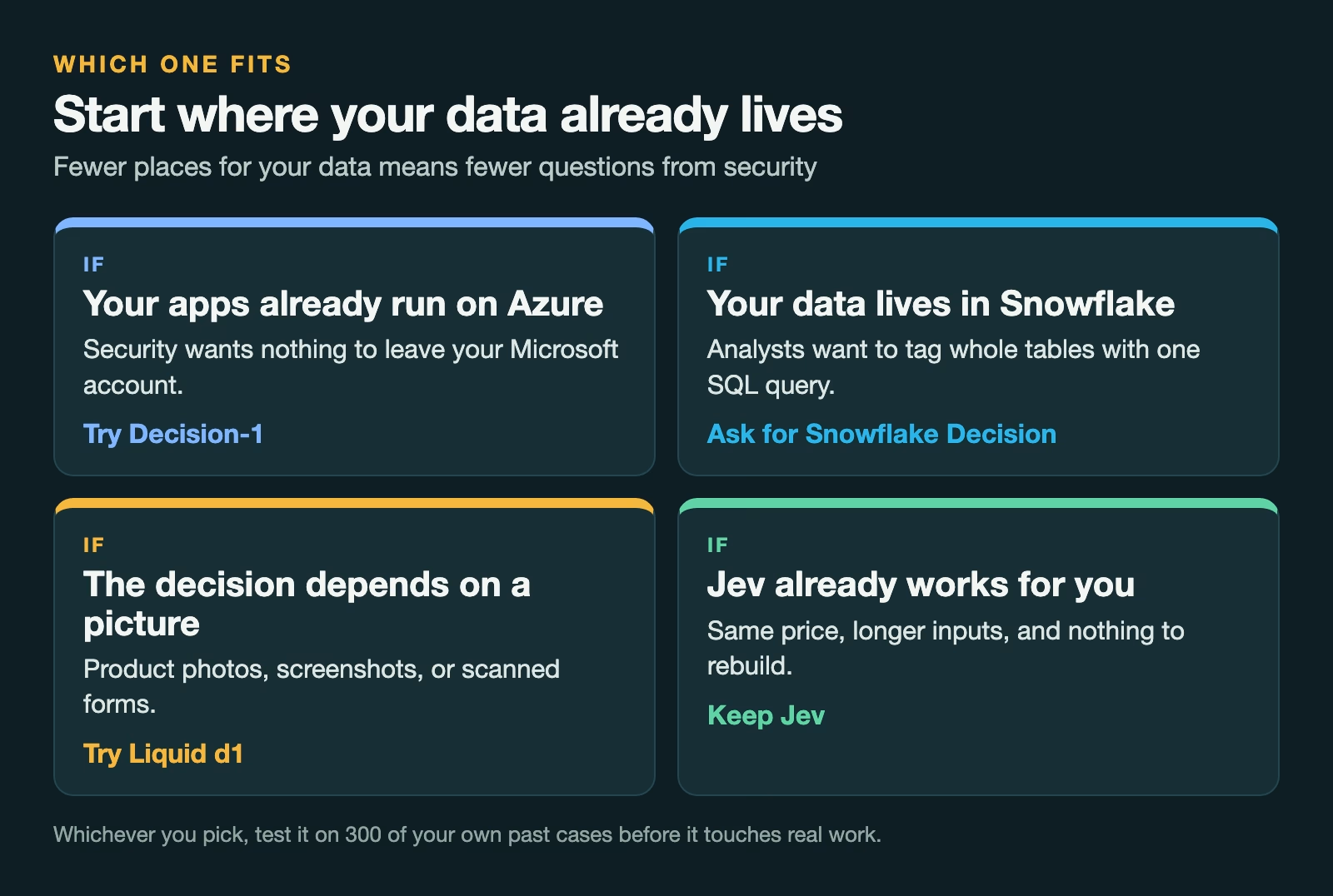
If Jev already works for you, price alone is a weak reason to move. Switch when your security team wants everything inside Azure, or when your data lives in Snowflake and your analysts work in SQL. Pick d1 for decisions about a photo or a screenshot, and Clef-omni for decisions about a recording or a video.
How to test Decision-1 on your own requests
Never switch on a vendor’s own test scores, because every quality number in this post came from the company selling the model. Test it on a few hundred of your own past cases instead. The plan below takes an afternoon and checks the two claims that matter most: accuracy and steadiness.
- Pull 300 past requests where you already know the right answer. Then you have an honest answer key to score against.
- Send each one to your current model and to Decision-1 with identical questions, and save both sets of answers. Then you compare like with like.
- Count how often each model is right, and read every case where they disagree. Those cases show where the risk is.
- Shuffle the order of the answer options and run 50 cases again. If the pick changes, Microsoft’s steadiness claim does not hold for your questions.
- Check calibration, which means asking whether answers scored 0.9 are right about 90% of the time. A model that is often confidently wrong is worse than one that says it is unsure.
Then set your cut-offs from what you saw, such as “act alone above 0.85 and ask a person below that”. Cut-offs belong to one model and one kind of question, so set them again whenever you switch.
Your next step this week: pick one yes-or-no question your team answers by hand every day, like “is this request urgent?”. Write down 50 past examples with the right answer. That small answer key is all you need to try Decision-1, Jev, or d1 side by side.
Sources
- Microsoft: Introducing Microsoft-Decision-1, our model for fast decision-making (announcement, price, base model, use cases, Microsoft’s own benchmark and internal-use claims)
- Microsoft Foundry catalog: Microsoft-Decision-1 (catalog listing)
- OrcaRouter: Microsoft-Decision-1 is GA on Foundry, with no benchmarks (context limit, text-only input, no downloadable weights, benchmarks tab at launch)
- TypeSafe: Jev models page (Jev price and request limit)
- Snowflake: Introducing Snowflake Decision in Cortex AI Functions (AI_COMPLETE call, private preview, governance, self-reported Jev Decision Index result)
- Liquid AI: Introducing d1 (image input, token counting for images, speed, price used in its cost comparison, self-run comparisons)
- Cloudflare blog: Introducing Clef-omni, a faster Clef and a cheaper Clef-flash (October 9 price cut, Clef-omni inputs and price)
- Cloudflare Workers AI pricing (Clef-flash and Clef-omni prices)
- Perplexity: Decisions quickstart (pplx-decider price, request limit, image input)
- Perplexity Developers on X (self-reported Decision Bench result)
- Subquadratic: SubQ Snap (launch, price, request limit, self-reported comparison with Jev)
Keep going
Same lessons in your feed
Short diagrams, hooks, and weekly tutorials on Substack, Instagram, X, and Facebook.