Tuesday, 7:18 p.m. You have a mug photo that is almost right, except the handle is in shadow and the paper sleeve says DOK 4 instead of DOCK 4. The brand teal on the glaze is supposed to be #0F766E. You hit generate from scratch. Twelve times. By pass 4 the handle is thinner. By pass 8 the mug is a random mint. By pass 12 the lid is gone, a second mug has appeared, and the sleeve has a blob that looks like a coffee chain mark you do not own. The Thursday merch tile is still empty. You spent forty minutes and you do not have a file.
Regen-from-zero is a new roll of the dice. Edits are how you keep the dice that already landed. This is Part 22 of the Grok series: Imagine edits and iterations that stick. Part 21 was text to image from zero. Analytics Made Simple is educational. We are not an xAI partner. UI labels move. Re-check grok.com/imagine the week you do this for real.
Why twelve from-scratch generates drift color, props
- Why twelve from-scratch generates drift color, props, and type
- How to point at a region instead of rewriting the universe
- When to attach reference images (and the consumer vs API count hedge)
- Background removal and smart resize as separate jobs
- A three-pass budget, plus a toy label-and-crop edit you can copy
Why regen-from-zero drifts
Each new generate samples a scene from your words. The words did not change. The sample did. That is why the mug walks off #0F766E. The model is not holding a pantone chip in its hand unless you give it one (a reference) or you refuse to reroll the whole frame. If the table, the window, and the plant were good on v1, those pixels are an asset. Throwing them away because the sleeve type is wrong is like rewriting a whole SQL query because one alias is misspelled.
Drift shows up in four ugly ways. Color slides toward a neighbor (teal to mint to forest). Counts change (one mug becomes two). Type mutates (DOCK 4 to DOK 4 to a squiggle). Fake marks appear on empty plastic because “product photos often have logos.” If you keep rerolling, you are training yourself to accept “close enough.” Close enough is how a mystery mermaid lands on a listing.
Keep v1. Name it. Edit v1. Only kill the file if the scene itself is the problem: wrong room, photoreal person you did not ask for, a skyline, a logo wall. Scene junk gets a new generate from the same brief. Local junk gets a pointed edit.
Point at the region
Image 2.0 (Quality Mode as of Aug 7, 2026) adds tools for changing the bit you mean and leaving the rest. Vendor names include a magic wand for the region you point at, and segmentation for a more precise selection. The live button may say wand, region, select, or something newer. The habit is the same: isolate the sleeve, the handle, or the wall, then say the change in one sentence.
Good region prompts are boring.
On the paper sleeve only: replace the letters with exactly DOCK 4 in bold sans-serif, black on cream. Do not change the mug glaze, handle, table, or plant.Bad region prompts invite a reroll: “make the product look more premium and fix the text.” Premium is not a region. Fix is not a spelling. The model will “help” by changing the glaze, adding a lid, and inventing a badge.
One change per pass. Type first if type is wrong. Color second if color is wrong. Handle shadow third. If you stack three asks in one edit, you will not know which instruction caused the new mint glaze. You will then regen-from-zero in a mood, and we are back at 7:18 p.m. with twelve files and no listing.
Rule of thumb: If you cannot circle the mistake with a finger, you are not ready to edit. You are ready to rewrite the brief.
Reference images
Words are weak at “this exact teal” and “this exact mug shape.” A photo is strong. Multi-ref editing lets you attach source images so the model can copy a subject, a palette, or a layout instead of guessing. Hedge the count: xAI’s Image 2.0 consumer post says up to 5 input images in one generation. Imagine API docs also mention up to 3 refs on some edit endpoints. Check the control you are in. Do not promise five in a script that hits the API until you have read the live route.
What to attach:
- A crop of a real mug you already photographed, or a pack shot you own
- A color chip PNG of
#0F766E(a rectangle you made in any editor) - The v1 still, if you are compositing a corrected sleeve onto the same table
What not to attach: a competitor’s product page, a celebrity, a coworker’s headshot without written consent, a Disney still, a logo sheet you found on Google Images. Refs are not a loophole around rights. The last Imagine part in this series is the rights post. If you would not put the source file in a shared drive with Legal cc’d, do not drop it into Imagine.
Say what each ref is for. “Image 1 is glaze color only. Image 2 is mug shape. Ignore any text in the refs.” If you stay silent, the model may copy a watermark or a store sticker from the source and call it texture.
Background and resize
Background removal is a different job from “make the room nicer.” Use it when you need the mug on a transparent field so a designer (or you, in a slide) can drop a solid color behind it. Do not ask the model to invent a marble showroom if the listing template already has a cream tile. Invented rooms bring invented windows, invented plants, and sometimes invented windowsill logos.
Smart resize (Image 2.0) recomposes one image into another ratio: 1:1, 4:5, 9:16, 16:9, and other live options. That is how a 16:9 table scene becomes a square listing without you stretching the mug into an oval. Ask for the ratio you will ship. Then inspect. Resize can invent extra table at the edges. It can also crop a title if you were foolish enough to put type in the photo. Contain the subject. If the mug is the product, the mug must stay fully in frame. Chopped handles look like a bug.
Treat resize as pass 3, not pass 1. Fix letters and glaze in the native frame first. Then recrop. If you resize a misspelled sleeve, you now have a crisp 1:1 of a wrong word.
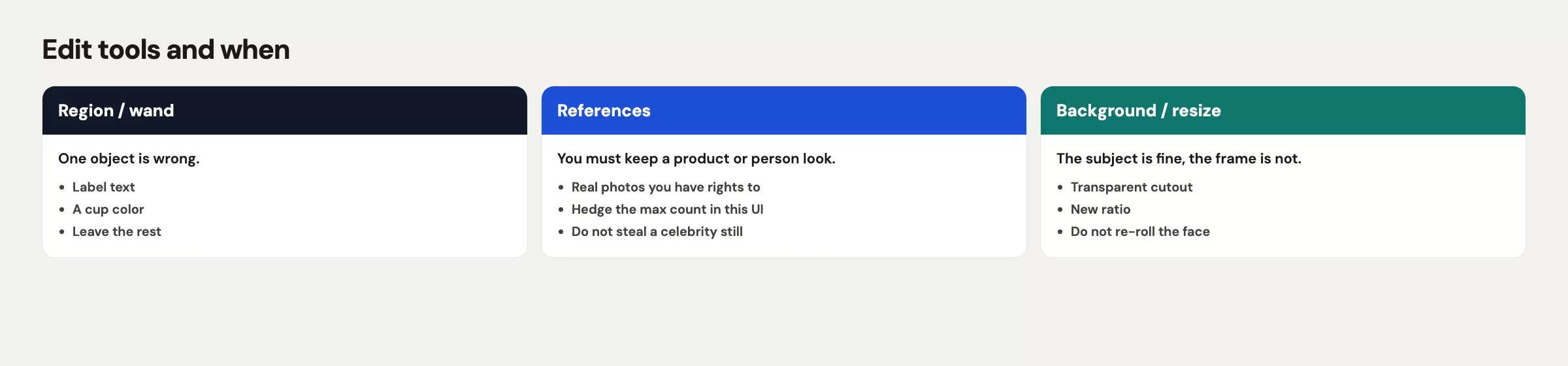
| Tool | Use when | Skip when |
|---|---|---|
| Region / magic wand | One object is wrong (sleeve type, handle shadow, wall outlet) | The whole room is the wrong brief |
| Segmentation | You need a cleaner mask than a rough wand (mug only, no table) | You have not tried a simple region pass |
| Reference images | Exact color, exact shape, or a layout you already like | The ref is a brand, person, or character you may not use |
| Background removal | You need a cutout for a template you already have | You want the model to dream a new store |
| Smart resize | Same scene, new ratio (16:9 to 1:1) | Type is still wrong, or the subject would be cropped |
| New generate from same brief | Scene junk: wrong room, extra people, logo wall | Only the sleeve letters are wrong |
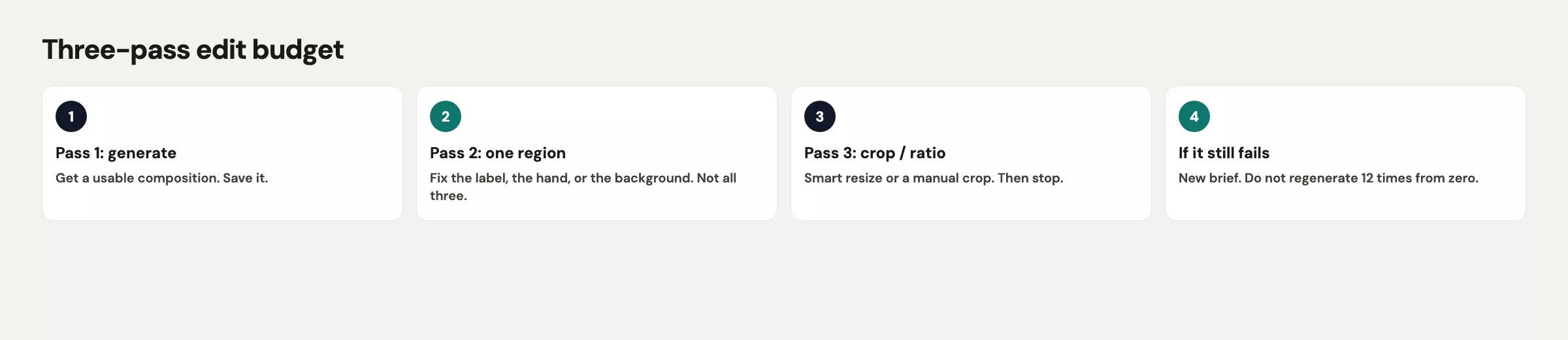
A three-pass budget
Give yourself three edits after a keepable v1. Write the three asks in a note before you touch the wand. Then stop. Perfection is how twelve regenerations happen. Good enough is a sleeve that spells DOCK 4, glaze in the right teal family, and a ratio that matches the tile.
- Pass 1: type or the local defect you can circle.
- Pass 2: color or shape, with a ref if you have one.
- Pass 3: background cutout or smart resize to the ship ratio.
If pass 1 ruins the table, undo. Do not “fix the table” as a fourth adventure. Go back to v1. If the product does not have undo in the UI this week, you still have the file you downloaded. Download after every keepable pass. mug-teal-v1.png, mug-teal-v1-sleeve.png, mug-teal-v1-sleeve-1x1.png. Filenames are cheaper than memory.
Stop when the listing can go live without embarrassment. A slightly dark handle is a photographer’s problem you can live with. A misspelled sleeve is a ticket. A fake logo is a Legal problem. Budget your taste against that ranking.
Worked edit: label and crop
Toy job: a 1:1 tile for an internal merch drop. Product name in your sheet: AMS-MUG-TEAL. Glaze target #0F766E. Sleeve text exactly DOCK 4. You already have a 16:9 still from Part 21’s kind of brief: table, window, one mug, no people. The sleeve says DOK 4. The glaze looks a bit blue. The listing hole is square.
Pass 1, region on the sleeve only:
Edit the paper sleeve only.
Replace all letters with exactly: DOCK 4
Bold sans-serif, black ink, cream sleeve, centered.
Do not change mug shape, glaze, handle, table, plant, or window.
Inspect at 100%. Read D-O-C-K-space-4 aloud. If you see D0CK (zero) or DOOK, repeat pass 1 on the sleeve. Do not touch glaze yet.
Pass 2, color with a chip. Make a 200×200 PNG filled with #0F766E in any editor. Attach it as a ref if the control allows. Point at the glaze, not the sleeve.
Mug glaze only: match the attached color chip #0F766E.
Keep the sleeve text DOCK 4. Keep the handle shape. No extra logos on the ceramic.
Pass 3, smart resize to 1:1. Ask the model to recrop so the mug stays fully in frame, handle included, with a little table showing. Then glance at the edges for invented outlets, extra mugs, or a second sleeve. If the 1:1 looks clean, export ams-mug-teal-1x1.png and stop. You still have a wishlist (brighter window, less grain). Wishlist is not a fourth pass unless Legal or the listing template blocks you.
What a clean toy result looks like:
| Pass | You asked | Ship check |
|---|---|---|
| v1 (kept) | 16:9 table scene, one mug | No people, no fake marks, sleeve wrong |
| Pass 1 | Sleeve = DOCK 4 | Letters read correctly at 100% |
| Pass 2 | Glaze toward #0F766E | Teal family, not mint, not navy |
| Pass 3 | Smart resize 1:1 | Full handle, no extra mug at the edge |
Twelve from-scratch generates because one word was wrong.
- Twelve from-scratch generates because one word was wrong. Edit the word.
- Three stacked asks in one wand pass, so you cannot tell what broke the glaze.
- Resizing a misspelled sleeve into a crisp square of the same typo.
- Attaching a competitor pack shot as a “style ref” and shipping a lookalike mark.
- Assuming the consumer 5-ref ceiling is the same as every API edit route (check the control).
- Never downloading v1, then losing the only good table when pass 2 goes mint.
- Inventing a marble kitchen with background tools when the template already has a cream tile.
Regen-from-zero drifts color, counts, type, and marks
Take one keepable still from Part 21 (or a photo you own). Write three passes on paper. Run only those three. Download after each keepable pass. If you still want a fourth change, wait until tomorrow. Taste inflates at 7:18 p.m.
Next: Grok Imagine video and motion, without burning the budget. Still first. Then a short clip. One camera move. Clips run seconds to about 15 seconds. Hub: Grok series. Related caution: privacy and work.
Regen-from-zero drifts color, counts, type, and marks (iterations)
- Regen-from-zero drifts color, counts, type, and marks. Keep v1 if the scene is good.
- Circle the defect. Region-edit one thing. Inspect at 100%.
- Refs hold color and shape. Hedge 5 vs 3 depending on consumer studio vs API.
- Cut out a background only for a template you already have. Smart resize last.
- Three passes. Download each. Stop when the tile can ship.
Sources
Research and further reading used for this article:
- xAI: Imagine Image 2.0 (region edits, segmentation, background removal, multi-ref up to 5 on consumer, smart resize)
- xAI docs: Imagine overview (edits, multi-image notes, some endpoints mention up to 3 refs; hedge)
- Grok Imagine (Quality Mode studio)
- xAI Console (API keys if you automate edits; separate from chat plans)
- xAI API (model id
grok-imagine-image-2.0) - Analytics Made Simple: Grok series
- Analytics Made Simple: Learn
Keep going
Same lessons in your feed
Short diagrams, hooks, and weekly tutorials on Substack, Instagram, X, and Facebook.
Merch on Etsy
Open store → You're On Mute White Ceramic Coffee Mug, Data Science Mug, Data Mug, Analytics Mug, Statistics Mug, Programming Mug, Gift Mug, Coffee Mug
View on Etsy →
You're On Mute White Ceramic Coffee Mug, Data Science Mug, Data Mug, Analytics Mug, Statistics Mug, Programming Mug, Gift Mug, Coffee Mug
View on Etsy →
 Good Cheap Fast White Ceramic Coffee Mug, Data Science Mug, Data Mug, Analytics Mug, Statistics Mug, Programming Mug, Gift Mug, Coffee Mug
View on Etsy →
Good Cheap Fast White Ceramic Coffee Mug, Data Science Mug, Data Mug, Analytics Mug, Statistics Mug, Programming Mug, Gift Mug, Coffee Mug
View on Etsy →
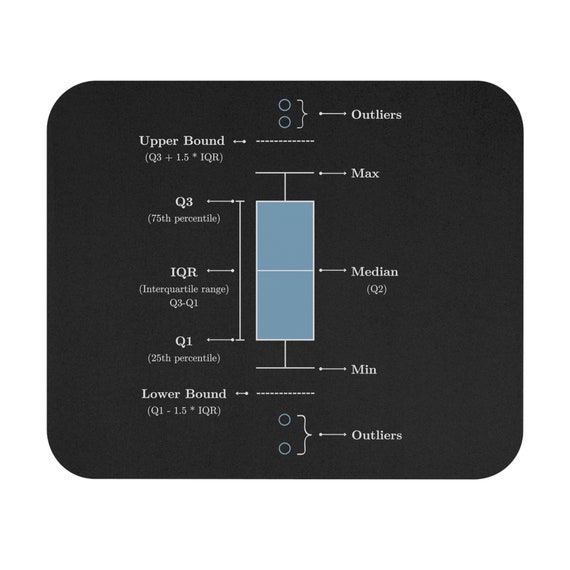 Boxplot Mouse Pad, Data Science Mouse Pad, Analytics Mouse Pad, Box Plot, Whisker Plot
View on Etsy →
Boxplot Mouse Pad, Data Science Mouse Pad, Analytics Mouse Pad, Box Plot, Whisker Plot
View on Etsy →
 You're On Mute White Ceramic Coffee Mug, Data Science Mug, Data Mug, Analytics Mug, Statistics Mug, Programming Mug, Gift Mug, Coffee Mug
View on Etsy →
You're On Mute White Ceramic Coffee Mug, Data Science Mug, Data Mug, Analytics Mug, Statistics Mug, Programming Mug, Gift Mug, Coffee Mug
View on Etsy →