
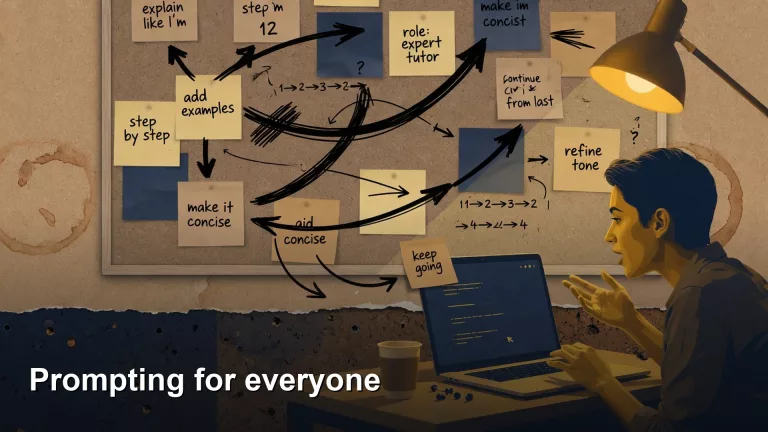
This path is for you if the advice online sounds like magic words. Parts teach a plain request, context and examples, what to do when the first answer is wrong, a few real tasks, and when to stop prompting and do the work yourself. Start with the first part on this page.
- 1 How to talk to an AI chatbot clearly, without magic prompt words Treat a prompt as a work request. Name the task, audience, facts, format, and avoids. Eight words get you a 400-word essay; six clear lines get you three bullets before the 9:20.
- 2 How to give an AI chatbot context, limits, and examples for better answers Models fill empty briefs with default memos. Pack context, constraints, and one example of the shape so a 90-second standup does not become a three-page vision note.
- 3 What to do when an AI chatbot’s first answer is wrong Name the error, keep what worked, ask smaller. Fix the brief instead of seven tone rounds with a stale number still in the draft.
- 4 How to prompt AI for study notes, work email, plans, and shopping research Study, email, plans, and shopping share one skill: one job per chat, named constraints, and verify before you spend or send.
- 5 When to stop prompting an AI chatbot and do the task yourself Prompting has a clock. When facts, feeling, or your signature matter, close the chat and do the task yourself.