
You signed in, stared at an empty chat box, typed “hello,” got a friendly paragraph back, and then closed the tab because you were not sure what a good first session looks like. That is normal. New AI apps feel like walking into a hardware store without a shopping list: infinite aisles, zero progress.
This is Part 3 of Learn Gemini from scratch. You will run a timed first thirty minutes on the Gemini app and web so you leave with one useful artifact, not a vague sense that “AI is cool.” Parts 1 and 2 covered the map and the plans. Here we click.
What you’ll learn
- Where to open Gemini on web and mobile, and how to confirm the right Google account
- What to do in the first 5, 12, 20, and 30 minutes
- A simple prompt pattern that produces editable drafts
- How to use one safe file or paste without oversharing
- How to save work outside the chat so it is not trapped in a thread
- A short checklist for ending the session cleanly
Pick a surface and stick with it for half an hour
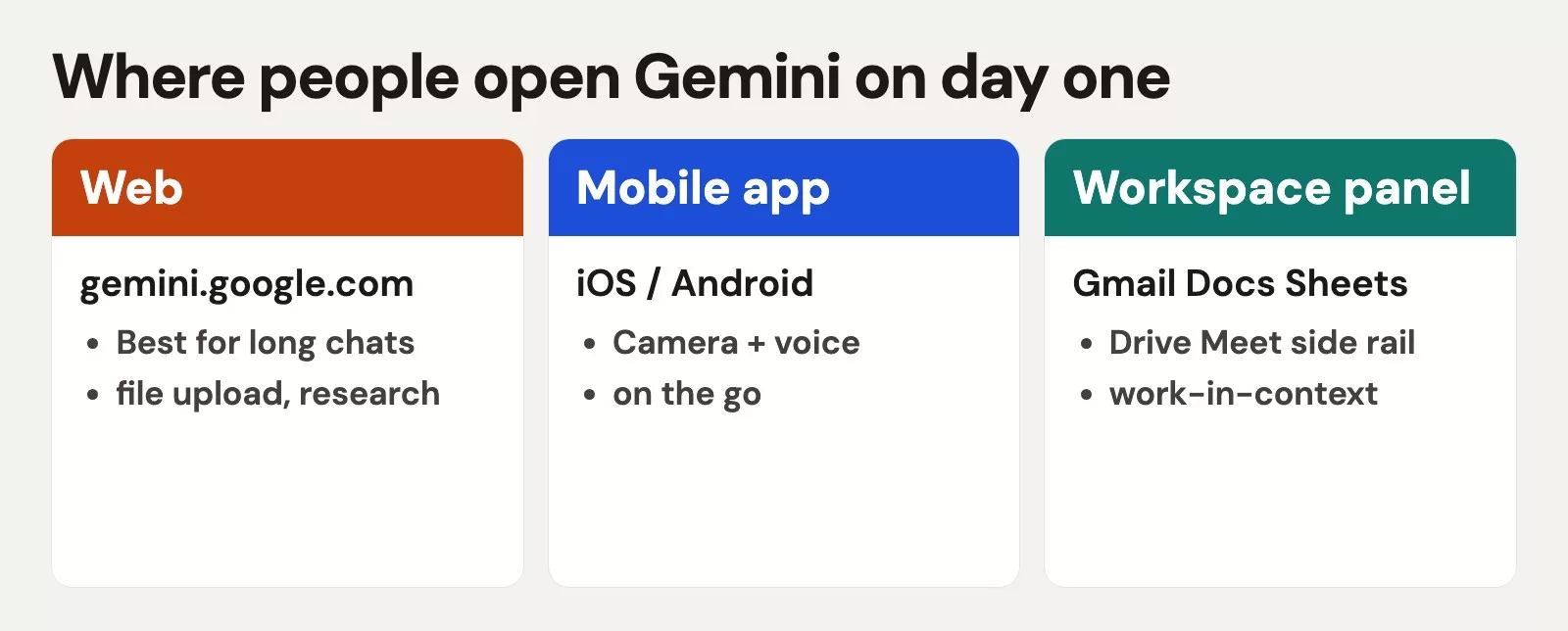
For this practice session, prefer web if you can: larger screen, easier file handling, easier copy-out. Use mobile if that is truly where you will work (commute practice, camera jobs). Skip the Workspace side panel for this first drill unless your only allowed surface is work mail; Workspace gets its own Part 4.
Before anything else, click your avatar or account menu and confirm which Google account is active. Mixing a personal hobby account with a work browser profile is how people accidentally paste the wrong things into the wrong place.
The thirty-minute path
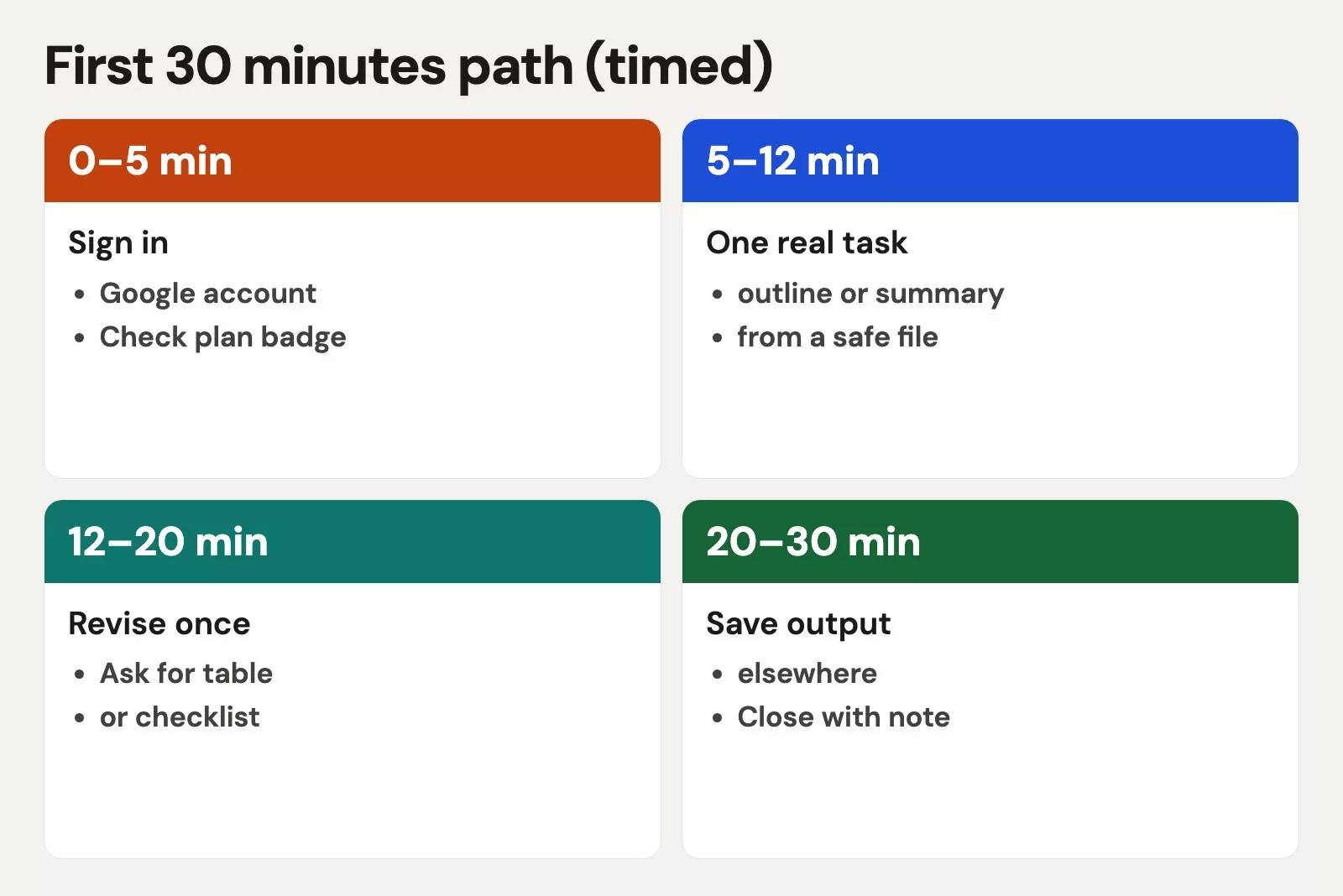
Minutes 0 to 5: land and orient
- Go to gemini.google.com or open the mobile app.
- Confirm account and glance at any plan badge or upgrade prompts (you are not buying anything in this drill).
- Notice where to start a new chat, attach a file, and open settings or activity controls (you will use privacy detail in Part 6).
- Write your goal in one sentence on paper or in a notes app: “Produce a one-page outline for X.”
Minutes 5 to 12: one real task
Pick a task that is real but low risk. Examples:
- Outline a 30-minute team meeting for a process that already exists
- Turn rough bullets into a polite status email
- Explain a concept you must teach someone else tomorrow
- Summarize a public PDF or a document you wrote yourself
Use a prompt with shape, not vibes:
Role: You are a careful assistant for a busy professional.
Task: Create a one-page outline for a 30-minute weekly ops review.
Audience: five people who already know the project.
Constraints:
- 6 sections max
- each section has 2 bullets
- plain language, no hype
- flag anything that needs a real metric from me
Output: markdown headings I can paste into Docs.
Why this works: role sets tone, task is singular, audience prevents generic fluff, constraints force structure, and the flag line invites honesty about missing numbers.
Minutes 12 to 20: revise once like a colleague
Do not accept the first draft as finished. Send one revision pass:
Revise the outline:
1) Cut anything vague
2) Replace adjectives with actions
3) Add a 5-minute timebox per section
4) Keep total under 200 words
Return only the revised outline.
If you have a safe sample (your own agenda from last week, a public article), paste a short excerpt and ask: “Align the outline to this context without inventing metrics.” Still verify anything that looks like a fact.
Minutes 20 to 30: save outside the chat
- Copy the final outline into Google Docs, Notes, or email drafts.
- Add one line at the top: “Drafted with Gemini on [date]; metrics not verified.”
- Delete or avoid leaving secrets in the thread if you pasted anything borderline.
- Write a two-line retrospective: what worked, what you will try next time.
Chats are not a document system of record. Threads get messy. Your notes app is boring and trustworthy.
Prompt patterns that beat “write something good”
| Pattern | Example seed | Why it helps |
|---|---|---|
| Role + task + constraints | See code block above | Reduces generic essays |
| Input → transform | “Turn these bullets into a table with owner and due date” | Forces structure |
| Explain like… | “Explain this error to a tired support agent in 5 steps” | Sets reading level |
| Critique my draft | “Mark weak claims; do not rewrite yet” | Separates review from rewrite |
| Missing info list | “List questions you need before a final version” | Surfaces unknowns early |
Files and images in the first session
If the UI offers attachment, start with something you would forward to a colleague without flinching: a public PDF, a doc you wrote, a screenshot of a non-sensitive error. Do not upload customer exports, ID scans, or password screenshots. Part 5 goes deeper on multimodal safety.
When you attach a file, ask for a structured output: “Summarize in 8 bullets, then list 5 open questions, then quote 3 short passages that support the summary.” Structure makes verification easier than a smooth essay.
Mobile-specific notes
On mobile, voice input is useful for brainstorming while walking, but your transcript may be messy. End mobile sessions by pasting the good parts into a note. Camera input is powerful for whiteboards and packaging labels; it is also how badge photos and private screens enter a chat by accident. Aim the camera on purpose.
What success looks like after 30 minutes
- You have one artifact outside Gemini (outline, email, checklist)
- You revised at least once
- You know which account you used
- You did not paste anything you would regret in a phishing report
- You can name the next real task for tomorrow
Common first-session mistakes
- Only testing with “write a poem about my job” (fun, not skill-building)
- Accepting the first draft without a revision pass
- Leaving the only copy inside the chat
- Switching accounts mid-session and losing track of where data went
- Treating upgrade banners as emergencies
Practice for tomorrow (20 minutes)
Repeat the path with a different deliverable: a FAQ for customers, a project kickoff agenda, or a study plan. Keep the same prompt skeleton. Compare which constraints helped most.
A second worked example: status email in one pass
Suppose you need a Friday status note to a manager who skims on mobile. After the outline drill, run this as your second artifact in a later session:
Write a status email.
Audience: my manager who has 60 seconds.
Inputs:
- Shipped: onboarding checklist v2
- Stuck: waiting on legal for vendor DPA
- Next week: pilot with two internal teams
Constraints:
- under 110 words
- no hype adjectives
- one clear ask
- subject line under 6 words
Return subject + body only.
Then revise: “Make the ask a yes/no question. Move the blocker to the first bullet.” Copy into Gmail or your mail client. This is the whole game: structured request, one revision, human send.
What the empty chat is for (and not for)
Empty chat is a scratchpad for thinking. It is not a project tracker, not a CRM, and not a place to store the only copy of a decision. If a thread becomes valuable, extract the decision into a doc with a date and an owner. If a thread becomes embarrassing, delete what you can under activity controls and tighten your paste habits (Part 6).
Also: new chat vs long thread. Long threads carry useful context and also carry early mistakes the model keeps echoing. When the conversation goes sideways, start a fresh chat with a clean brief and link or paste only the final constraints. That feels wasteful. It is usually faster than arguing with a confused thread.
Settings worth a two-minute tour
- Theme and text size if you will work long sessions
- Linked apps or extensions (only enable what you understand)
- Activity / history controls (bookmark for Part 6)
- Model or mode picker if shown (prefer the default for day one; change later with intent)
- Help or release updates link so you know features move
Do not spend day one customizing ten toggles. Spend day one producing one artifact. Customization is a week-two problem.
If you get stuck or the answer is fluff
Fluff usually means your prompt had no audience, no length limit, and no definition of done. Add those three. If the model still rambles, ask: “Return only a bullet list with 7 items, each under 12 words.” Constraints are kindness to future-you who has to edit.
If the product errors, switches models, or refuses a request, note whether you hit a safety boundary, a plan limit, or a temporary outage. Those are different fixes: rephrase, upgrade or wait, or try later. Do not assume every refusal means you are being scolded.
Quick recap
- Confirm account, pick one surface, run a timed path.
- Use role + task + constraints; revise once; save outside the chat.
- Start files and photos only with low-risk material.
- Next: Part 4, Gemini inside Gmail, Docs, Sheets, and Drive.
Sources
Merch on Etsy
Open store → Mute Mouse Pad, Data Science Mouse Pad, Analytics Mouse Pad, You're On Mute
View on Etsy →
Mute Mouse Pad, Data Science Mouse Pad, Analytics Mouse Pad, You're On Mute
View on Etsy →
 Y Hat Mouse Pad, Data Science Mouse Pad, Analytics Mouse Pad, Y Pred Mouse Pad
View on Etsy →
Y Hat Mouse Pad, Data Science Mouse Pad, Analytics Mouse Pad, Y Pred Mouse Pad
View on Etsy →
 You're On Mute White Ceramic Coffee Mug, Data Science Mug, Data Mug, Analytics Mug, Statistics Mug, Programming Mug, Gift Mug, Coffee Mug
View on Etsy →
You're On Mute White Ceramic Coffee Mug, Data Science Mug, Data Mug, Analytics Mug, Statistics Mug, Programming Mug, Gift Mug, Coffee Mug
View on Etsy →
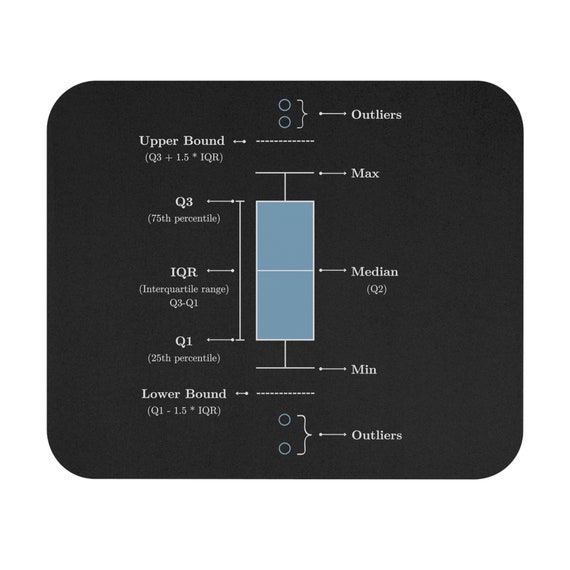 Boxplot Mouse Pad, Data Science Mouse Pad, Analytics Mouse Pad, Box Plot, Whisker Plot
View on Etsy →
Boxplot Mouse Pad, Data Science Mouse Pad, Analytics Mouse Pad, Box Plot, Whisker Plot
View on Etsy →